
ShopView vs MetaFleet
Both target heavy-duty diesel repair. But ShopView optimizes what happens inside the shop. MetaFleet is built for what happens when the truck breaks down on the highway. Here is the honest breakdown.
Built for in-shop heavy-duty operations. Strong technician time tracking, inventory management, fleet billing, and DOT/DVIR compliance workflows for fixed shop locations.
⚠ Designed for shop-based workflows, not emergency mobile dispatch

Built for mobile diesel and heavy equipment repair shops. AI dispatch, call-to-cash automation, parts inventory, customer portal, payment processing, and FleetNet integration. Simple, intuitive, and fast to learn — for mobile crews and shop operations alike.
✓ Purpose-built for emergency mobile operations
The fundamental difference
ShopView's positioning is built around what happens inside the bay — service orders in under two minutes, wrench time vs. idle time tracking, fleet billing cycles, inventory. They built a solid tool for shops where the workflow starts when a truck rolls in and ends when it rolls out.
MetaFleet was built for a different starting point: the phone rings at 2am with a truck down on I-40. The workflow begins before the tech leaves the yard — a call comes in, the AI captures the job details, the nearest available tech gets dispatched, and the invoice generates when the job closes. No service writer at a desk. No batch billing at the end of the month.
ShopView built a great product for in-shop operations. MetaFleet built a different product for a different reality. The question is which reality your shop lives in.
MetaFleet in action
From the moment a call comes in to the invoice hitting the customer's inbox — fully automated for field operations.
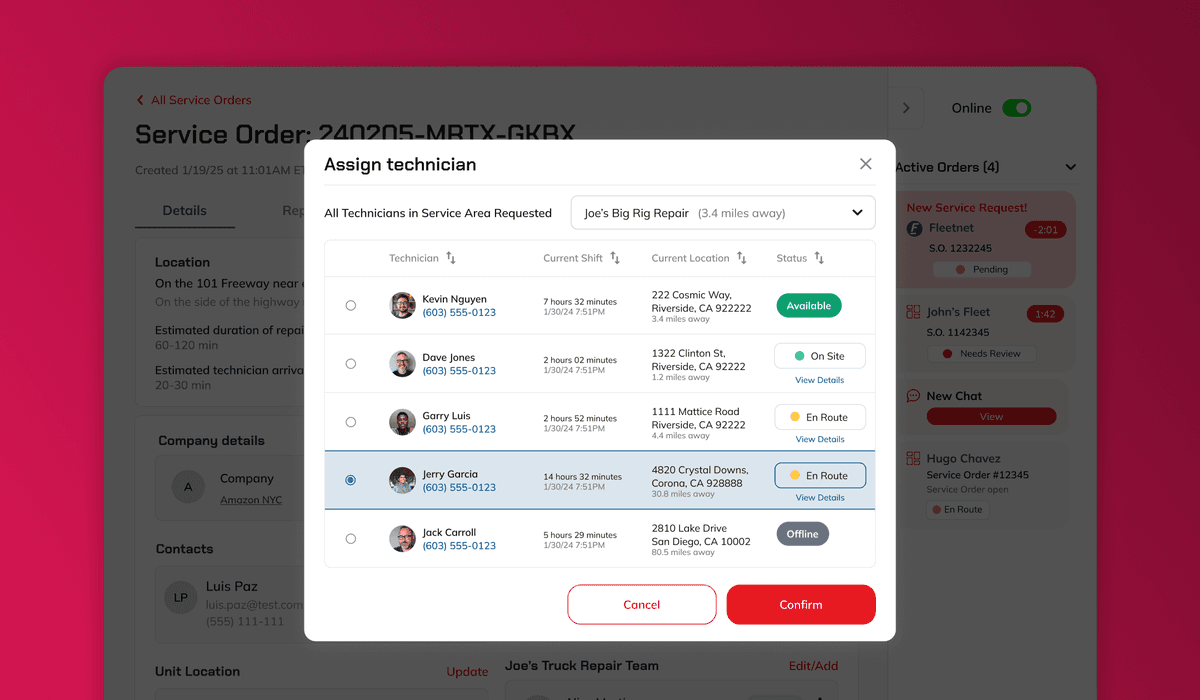
Distance-aware dispatch
Know exactly where every tech is and who can reach the job fastest.
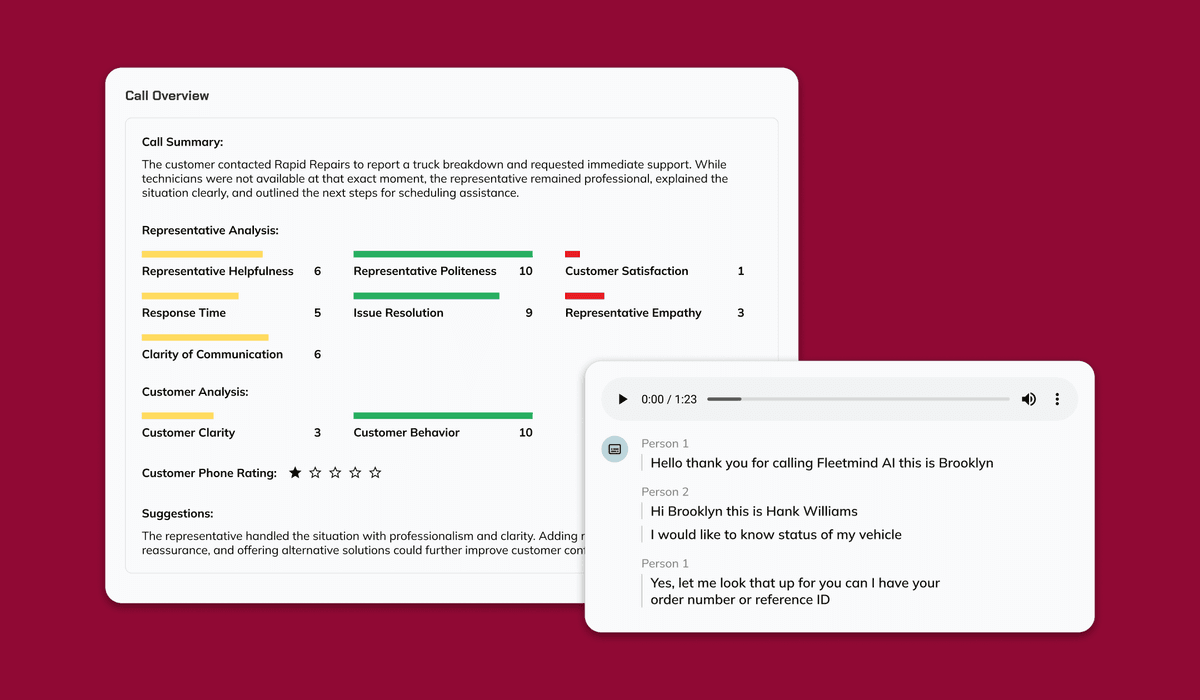
AI call analysis
Every inbound call is transcribed and analyzed. Job details captured automatically — no manual entry.
Feature comparison
| Feature | ShopView | MetaFleet |
|---|---|---|
| Purpose-built for mobile and roadside ops | ||
| AI dispatch (auto-assigns jobs to techs) | ||
| Call-to-invoice automation | ||
| AI call capture (extracts job details from calls) | ||
| AI diagnosis assistant | ||
| Field-native mobile app | Basic mobile access | |
| Emergency job urgency workflow | ||
| Real-time dispatch board | ||
| Automated invoicing on job close | ||
| Parts inventory management | ||
| Customer portal | ||
| Payment processing | ||
| FleetNet integration | ||
| AI chat assistant (general) | AI ShopCoach | |
| QuickBooks integration | Coming 2026 | |
| Technician time tracking (wrench vs. idle) | ||
| DOT/DVIR compliance workflows | ||
| Batch fleet invoicing | ||
| VMRS coding |
Where MetaFleet has the edge for mobile operations
Emergency dispatch that runs itself
ShopView manages jobs once they are entered into the system. MetaFleet creates the job from the inbound call — the AI extracts the breakdown location, equipment type, and urgency, then auto-assigns the nearest available tech. For shops fielding emergency calls, that difference is measured in hours per day.
AI that listens to every call
MetaFleet transcribes and analyzes every inbound and outbound call. It flags missed details, measures customer sentiment, and builds a job record without anyone typing a word. ShopView's AI ShopCoach is a chat assistant — it answers questions, but it does not listen to your calls or capture job data.
Customer portal and payment processing built in
MetaFleet includes a customer portal so your clients can track job status, access invoices, and pay online. Payment processing is built into the platform — no third-party integration needed. ShopView does not offer a customer-facing portal.
FleetNet integration for real network reach
MetaFleet integrates with FleetNet, giving you access to a national network of breakdown service providers. ShopView does not offer FleetNet connectivity. For shops handling roadside dispatch across wide service areas, this is a meaningful operational advantage.
Diagnosis before the truck arrives
MetaFleet's AI analyzes the customer complaint, equipment history, and photos to suggest likely failures, recommended parts, and repair steps — before the tech leaves the yard. ShopView does not offer pre-arrival diagnostic support. Techs show up and assess on-site.
Where ShopView has the edge
Being honest about ShopView's strengths matters. If these features define your operation, they belong in your evaluation.
DOT compliance and DVIR workflows
ShopView includes DVIR integration and DOT-specific compliance workflows. For shops where compliance documentation is a core deliverable to fleet customers, this is a meaningful feature.
Technician time and efficiency tracking
ShopView tracks wrench time vs. idle time per technician — useful for shops evaluating productivity and flat-rate efficiency. MetaFleet tracks field activity but does not emphasize this type of in-shop labor analysis.
Fleet billing and batch invoicing
ShopView offers batch invoicing tools for shops billing large fleet accounts on a cycle. If your revenue model involves consolidated monthly statements to fleet operators, ShopView's billing workflows are more developed for that use case.
Who should choose which
Choose ShopView if:
- Your operation is primarily in-shop — techs work in bays, not service trucks
- DOT/DVIR compliance documentation is a core requirement
- Your revenue model centers on fleet billing cycles and consolidated invoicing
- Wrench time vs. idle time tracking matters for your productivity model
- You need VMRS coding for fleet maintenance records
Choose MetaFleet if:
- Your techs work mobile, roadside, or on-site — not out of a fixed bay
- You are dispatching emergency and after-hours breakdown calls
- You want jobs created automatically from inbound customer calls
- Invoices are delayed because billing is disconnected from the job
- You need a customer portal and integrated payment processing
- You want FleetNet connectivity for broader service network reach
- You want a platform that is simple, intuitive, and fast to get your team on
Frequently asked questions
Common questions from shops evaluating both options.