
How to Start a Mobile Diesel Repair Business: The Complete Guide
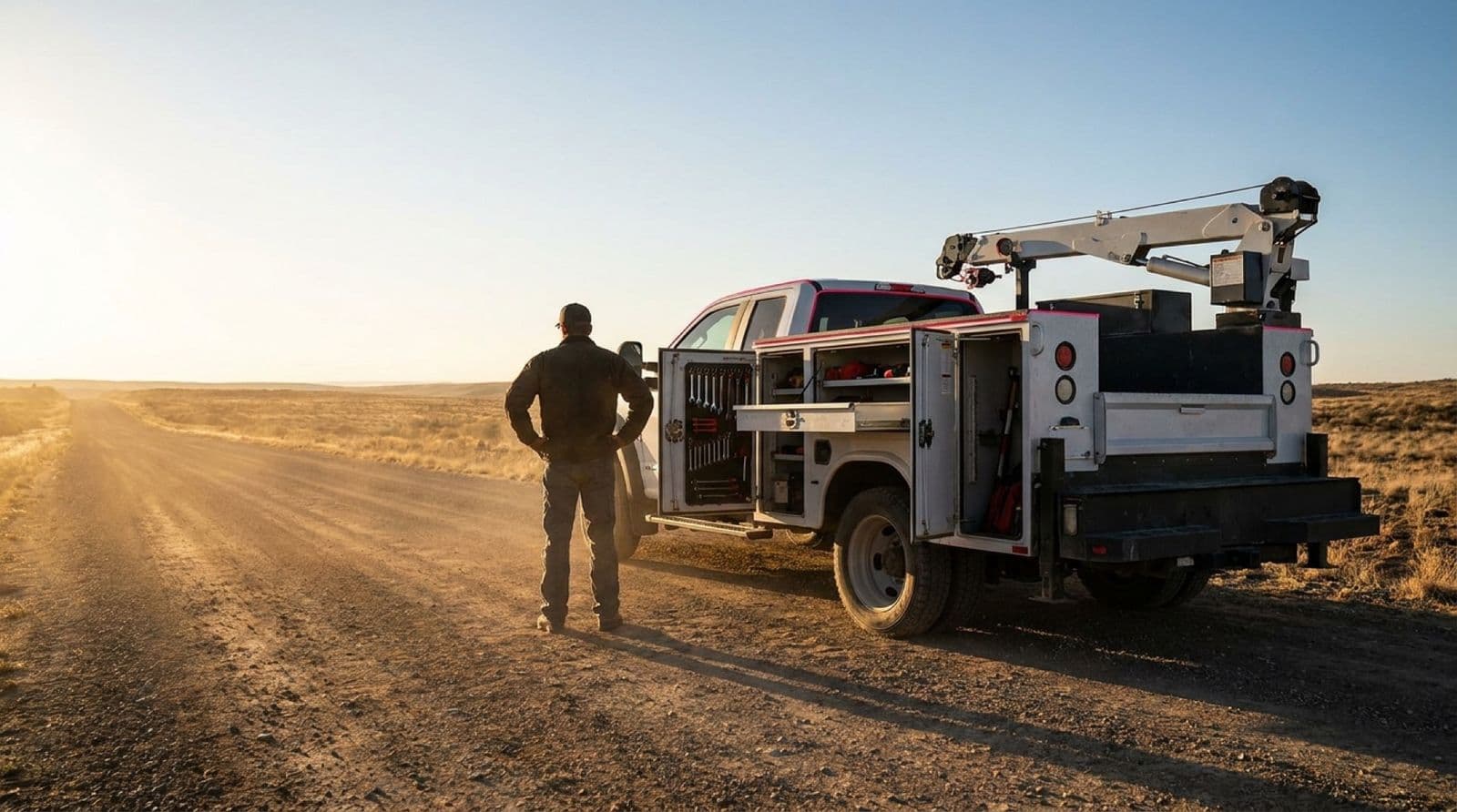
Everything it takes to go from diesel tech to open for business: certifications, licensing, insurance, real startup costs, pricing, and how to land your first fleet account, with 2026 numbers you can plan around.
To start a mobile diesel repair business, you need the right experience and certifications, a registered business with insurance, an outfitted service truck, a clear pricing model, and a plan to land your first customers. As a rule of thumb, plan on about $55,000 to $120,000 to get one truck on the road, plus $15,000 to $30,000 of working capital (about three months). That is about $70,000 to $150,000 all-in. A brick-and-mortar shop runs roughly $150,000 or more once you add the building, lifts and bays, so a mobile start usually costs less. The operators who last are the ones who treat it like a business from day one, not just a truck with tools.
The demand is real. Fleets are short on techs, downtime costs them hundreds of dollars a day, and a mechanic who comes to the truck instead of making the truck come to a shop is worth a premium. This guide walks the whole path, from certifications to your first fleet account, with real 2026 numbers and the honest version of what it takes.
Is a mobile diesel repair business worth starting in 2026?
Short answer: yes, if you go in with a plan. The tailwinds are strong.
- The industry is short on technicians. Shops across the country report they cannot hire fast enough, which means more work than the existing shops can absorb, and fleets that are willing to try a new mobile provider who actually shows up.
- Downtime is expensive. By a widely cited 2015 estimate, downtime costs a fleet about $450 to $760 per truck, per day in lost revenue and knock-on costs. On-site repair that gets a truck rolling faster is worth paying for.
- The margins can work. Margins vary widely with pricing, mix, and overhead, so price from your real costs and track your own trend. Startup cost usually runs below a fixed shop too, because your truck is your bay and you skip the building and lifts.
The catch: none of that matters if you underprice the work, run out of cash, or drown in paperwork. That is what the rest of this guide is built to prevent.
What a mobile diesel repair business actually does
A mobile diesel repair business brings the shop to the truck. Instead of a customer towing a dead rig to you, you drive an outfitted service truck to them, on the roadside, at a yard, or on a job site, and do the work there.
Your customers fall into a few buckets: owner-operators with a single truck that is their whole livelihood, small fleets that cannot afford downtime, construction and agricultural equipment stranded on-site, and roadside breakdowns that need someone now. This is heavy-duty and diesel-specific work, not light-auto, so the economics, the pricing, and the customer relationships all look different from a corner mechanic shop.
Step 1: Get your experience and certifications in order
You do not legally need a specific "diesel license" to turn wrenches for pay in most places, but certifications and experience are what earn trust and better-paying accounts.
ASE certification (expected, not required)
ASE certification is voluntary, but it is the industry's shorthand for "this person knows what they are doing." For heavy-duty work, the Medium/Heavy Truck series matters most, especially T2 (Diesel Engines), along with brakes, electrical, and preventive maintenance. Passing T2 through T8 earns Master Medium/Heavy Truck Technician status. Most certs require about two years of hands-on experience and are valid for five years before recertification.
The refrigerant rule you cannot skip
If you plan to service truck air conditioning for pay, EPA Section 609 certification is legally required, and it is separate from the Section 608 certification people often assume covers everything. If you touch transport-refrigeration (reefer) units, that is Section 608 territory. This is one of the few hard legal requirements, so get the right one before you take that work.
Do you need a CDL?
Usually no. A commercial driver's license is generally triggered only when your vehicle's gross weight rating hits 26,001 pounds. Most mobile service trucks, an F-550 or Ram 5500 class rig, sit below that. Note a separate rule, though: once your service truck is over 10,001 pounds and used commercially in interstate commerce, you likely need a free USDOT number, and federal safety rules like a DOT medical card and annual inspection can apply. This varies by state, so confirm with your state DOT. More on DOT annual inspection requirements.
Step 2: Write a simple business plan
You do not need a 40-page document. You need a plan that answers five questions: who you serve, what you charge, what it costs you to operate, how you will find customers, and how long your cash lasts before the business pays for itself. If you plan to finance a truck or equipment, a lender will want to see this, so write it down even if it is one page.
Step 3: Register your business
How you register affects your taxes and, more importantly, your personal liability.
- LLC vs. sole proprietor. A sole proprietorship is free and simple, but it gives you zero separation between business and personal assets. Given that you will be working on other people's expensive equipment and driving a service truck all day, most operators form an LLC for the liability protection. State filing fees vary widely, from $35 in Montana to $500 in Massachusetts, and some states add yearly fees or taxes (California charges an $800 annual LLC tax).
- EIN. Free from the IRS in a few minutes, and required to open a business bank account and file taxes.
- Resale certificate. This lets you buy parts tax-free for resale from your suppliers, then collect and remit sales tax from the customer on the marked-up part. Set it up when you open commercial accounts.
- State registration. A few states require a repair-business registration on top of the above. California, for example, requires an Automotive Repair Dealer registration for mobile repair of passenger vehicles, but exempts shops that service only commercial or off-road vehicles. Check your state, because the range runs from nothing to mandatory.
Step 4: Get the right insurance
Insurance is the line new owners most often get wrong, either skipping coverage they need or buying the wrong policy. A mobile diesel operation usually stacks a few:
- General liability covers third-party injury or property damage, the baseline policy.
- Garagekeepers covers damage to a customer's vehicle while it is in your care. General liability does not, and you will be working on trucks worth six figures.
- Commercial auto covers the service truck itself. A personal auto policy excludes business use, so this is not optional.
- Tools and equipment (inland marine) covers your gear against theft or damage, including inside the truck, which commercial auto specifically excludes. A truck break-in with a full set of tools inside is an inland-marine claim.
- Workers' comp is required in most states once you have employees.
Costs vary widely by state and coverage, but commercial auto is usually the largest line. Bundling into a business owner's policy is often cheaper than buying each standalone.
Step 5: Budget your startup costs
A realistic launch runs about $55,000 to $120,000 to get one truck on the road, plus $15,000 to $30,000 of working capital (about three months). That is a rule-of-thumb range built from typical equipment prices, and the truck and its upfit are the biggest lines. Here is where the money goes:
- Service truck: $25,000 to $50,000 used, more for a new purpose-built rig.
- Service body and upfit: $15,000 to $30,000 for a crane, air compressor, welder, and drawers; get upfitter quotes.
- Diagnostics: $3,000 to $8,000 to start, and this one has a trap, see below.
- Hand and pneumatic tools: $5,000 to $15,000, lower if you already own a set.
- Starting parts inventory: $3,000 to $8,000 in common wear items and fluids. See what to stock on the service truck.
- Formation and first insurance premiums: $3,000 to $8,000.
The diagnostics trap: scan-tool software is not a one-time buy. An all-makes platform can cost thousands up front, or you assemble an adapter like a Nexiq plus per-brand OEM software subscriptions, and those subscriptions (Cummins, Detroit, and the rest) renew every single year. Budget for the renewal, not just the purchase.
Want your real number instead of a range? The free Startup Cost Estimator asks about your truck, the work you'll focus on and how you'll pay for it, then builds an itemized estimate in about two minutes. Leave your email to get the full breakdown and a Startup Cost Worksheet to check against your own quotes.
Estimate My Startup CostsStep 6: Outfit your service truck and tools
Your truck is your shop, so build it to work from. Most operators run an F-550 or Ram 5500 class chassis with a service body, a crane rated for the components you will lift, an onboard air compressor, and a welder-generator. For diagnostics, a rugged laptop plus the adapter and software from Step 5 is the heart of the rig, because modern diesel work is as much software as it is wrenches.
Split your list into "day one" and "add as you grow." You do not need every specialty tool before you take your first call, and stretching to buy them all is a fast way to burn your startup cash.
Step 7: Set your pricing
Underpricing is the fastest way new mobile shops go broke. You win the job and lose the year. Build your rate from real numbers:
| Line | Typical 2026 range |
|---|---|
| Labor | Fullbay's State of Heavy-Duty Repair 2025-2026 survey puts the median heavy-duty labor rate at $149 an hour, and mobile work at about $160 versus $145 for general work, about a 10% premium. Rates vary widely by market, so check what shops near you charge. |
| Call-out / service fee | A common rule of thumb is $50 to $150 to cover travel and time. In the same Fullbay survey, about half of mobile providers charge travel by the hour (median $150 an hour) and about 10% add a mileage fee (median $2 a mile). |
| After-hours / emergency | A common rule of thumb is 1.5x to 2x your standard labor rate. |
| Parts | Marked up over your wholesale cost, with sales tax collected from the customer. |
The number one thing new owners forget: your rate has to cover travel time, fuel, insurance, and those annual software renewals, not just the hour you spend under the truck. Price for the whole day, not the wrench time.
Step 8: Get your first customers
You do not need a marketing budget. You need to be where trucks break down and where fleets look for help. Five places your first jobs come from: owner-operators, small fleets, construction and ag equipment, roadside breakdowns, and overflow from shops that do not offer mobile service.
To get found, do three things first: set up a free Google Business Profile so you can show up on Google Maps when someone nearby searches "mobile truck repair near me", list yourself in the breakdown directories drivers actually use (NTTS Breakdown Directory, 4RoadService, TruckDown, FleetNet America), and call everyone in your existing network to tell them you are open. The single most valuable win is your first fleet account, because one recurring account can replace a dozen one-off roadside calls.
We put the whole playbook, the fleet pitch, the first-call script, a pricing framework, and the quote, invoice, and fleet-agreement templates that make a one-person shop look established, into a free field guide. Grab it here:
The First 10 Customers Playbook
Where the work is, the fleet pitch, the first-call script, a 2026 pricing framework, and the quote, invoice, and fleet-agreement templates that make a one-person shop look established. Free, instant download.
No spam. The playbook plus the occasional resource for new mobile shops.
Step 9: Set up the system that runs your day
Here is the part almost every "how to start" guide skips. The day you take your first call, you are the technician, the dispatcher, the receptionist, and the bookkeeper all at once. The owners who make it are not the ones who work hardest, they are the ones who put a system in place before the work piles up.
Here is where software actually helps. AI will not turn a wrench or earn a customer's trust for you, and anyone claiming that is overselling. What it can do today is real and useful:
- Never lose a call. Calls on your MetaFleet phone line are recorded and transcribed, so the details of a roadside call land in the job instead of on a scrap of paper. See call analysis.
- Quote from under the truck. You type your findings on the job and the AI turns them into clean repair lines with a clear complaint, diagnosis and suggested labor hours, then into an estimate the customer approves. See the technician mobile app.
- Get paid and reconcile automatically. Approved work becomes an invoice, paid by card, and synced to QuickBooks, so there is no paperwork waiting at 11 p.m.
That is the difference between a truck with tools and a business that scales. MetaFleet is diesel repair shop software, built AI-native for mobile diesel shops, from the first call to the paid invoice. Want to see it on a real job? Watch MetaFleet in action. Comparing systems? See how MetaFleet compares with Fullbay, ShopView and other shop software.
Common mistakes that sink new mobile shops
- Running out of cash. The most common killer is not a lack of profit, it is a lack of cash while you wait on invoices. Keep a buffer and invoice the day the job is done. More on how to get paid faster.
- Underpricing to win work. Lowballing early sets a rate you can never raise, and it does not cover your true costs.
- Chasing one-off retail over fleet accounts. Recurring fleet work is what makes the business predictable. Chase the account, not just the job.
- Drowning in paperwork. Notes on shop rags and invoices done on Friday nights do not scale past your first busy month.
- Parts logistics. Not carrying the right common parts means a wasted round trip, and in the mobile model that is billable hours gone. Track what's on each service truck so you know before you roll.
Sources (18)
- Heavy Duty Journal: How to start a mobile diesel repair business (2025 guide)
- Fleet Maintenance: The true cost of vehicle downtime (May 2015)
- FreightWaves: Fullbay's 2026 report: Heavy-duty shops face structural technician shortage (March 2026)
- Fullbay: The State of Heavy-Duty Repair, 2025-2026 Edition
- ASE: Medium-Heavy Truck certification tests, T1-T8
- ASE: Official study guide, Medium/Heavy Truck tests (2026)
- U.S. EPA: Section 609 technician training and certification programs
- U.S. EPA: Section 608 and Section 609 overlap
- eCFR: 40 CFR 82.32, definitions (motor vehicle air conditioners)
- eCFR: 49 CFR 383.5, definitions (commercial motor vehicle for CDL purposes)
- FMCSA: Who needs to get a USDOT number?
- eCFR: 49 CFR 391.41, physical qualifications for drivers
- eCFR: 49 CFR 396.17, periodic inspection
- IRS: Get an employer identification number
- California Bureau of Automotive Repair: Apply for a license (Automotive Repair Dealer registration and exemptions)
- Montana Secretary of State: Business services filing fees
- Mass.gov: Starting a limited liability company (LLC) in Massachusetts
- California Franchise Tax Board: Limited liability company (annual tax)
FAQs
Ready to run it like a business from day one?
See MetaFleet in Action
Book a demo and we'll walk through how you'll take calls, quote and invoice, show you where MetaFleet fits, and build a simple plan for your first truck.
Not ready to talk? Try a free shop tool
Related Articles
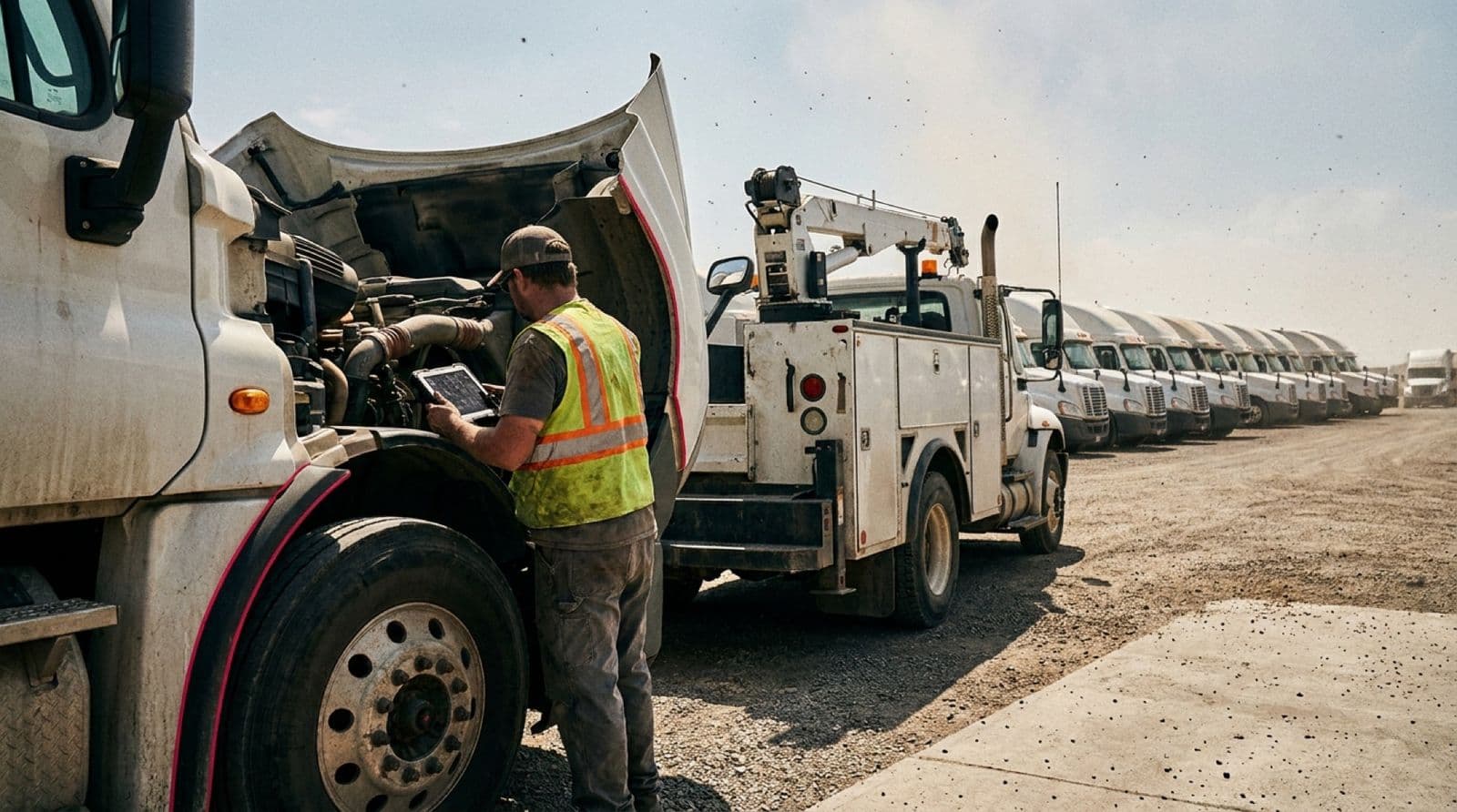
How to Win Fleet Maintenance Contracts: The Playbook
Winning a fleet maintenance contract is a proposal-and-trust problem. Here's the playbook: what fleet decision-makers actually buy, how to get your shop contract-ready, the seven-part proposal that closes, and how to price it so you win the account and still make money.
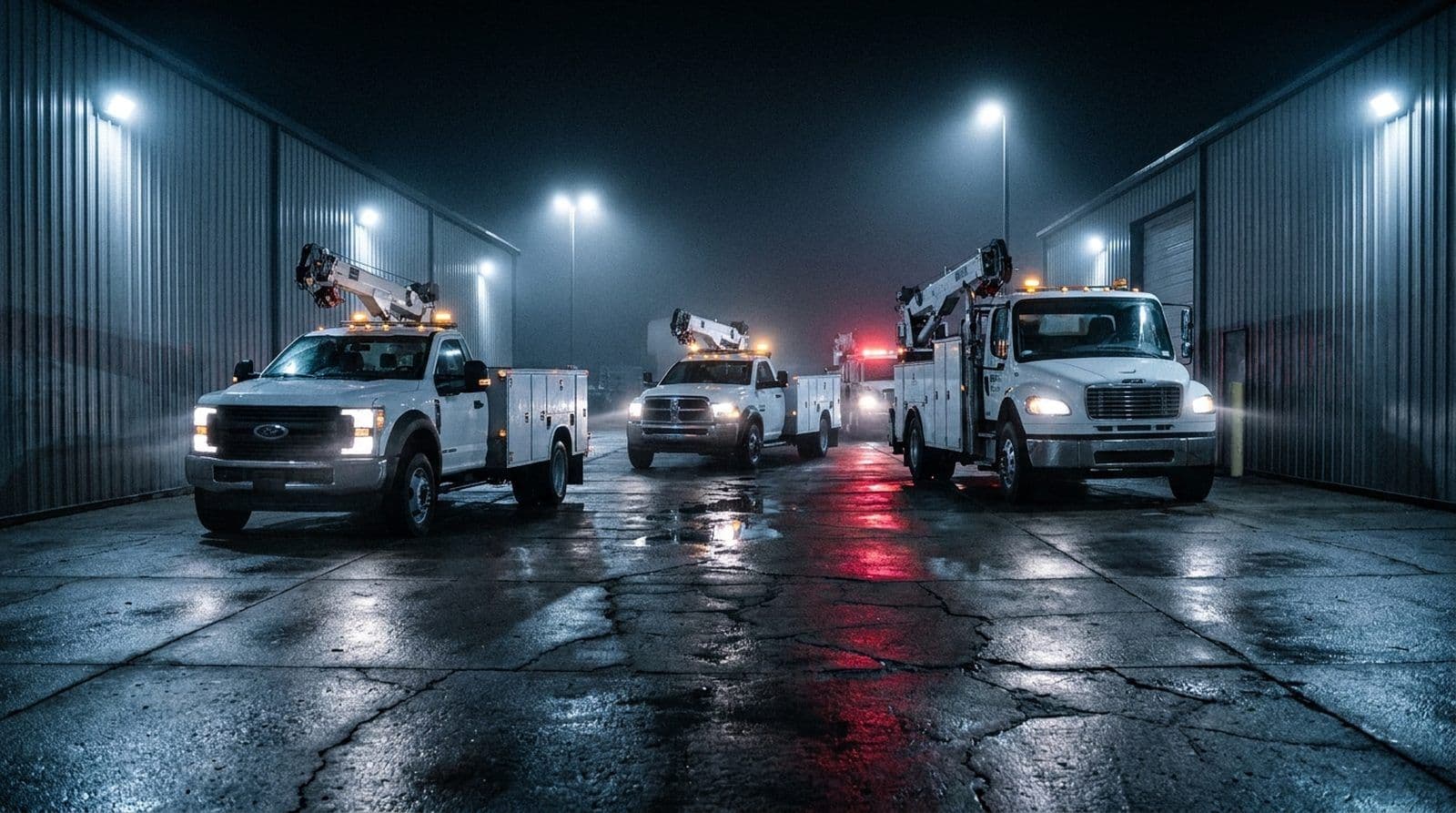
AI Dispatch Software for Emergency, Diesel & Heavy Equipment Repair
MetaFleet's AI dispatch software takes the chaos out of emergency, mobile diesel, and heavy equipment repair by turning calls into jobs, auto-assigning the best-fit tech, and keeping everyone in the loop from first ring to paid invoice.