
How to Win Fleet Maintenance Contracts: The Playbook
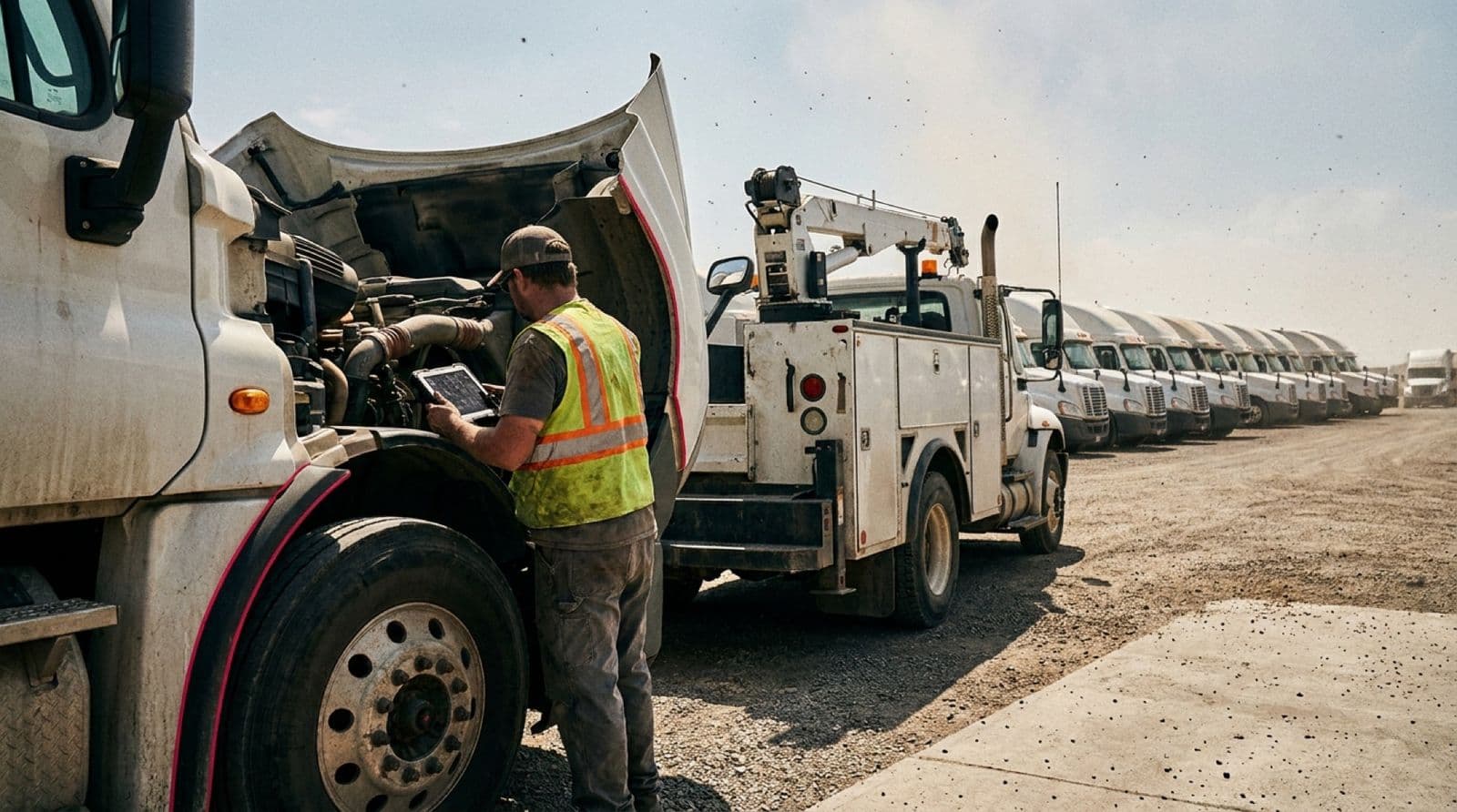
Winning a fleet maintenance contract is a proposal-and-trust problem. Here's the playbook: what fleet decision-makers actually buy, how to get your shop contract-ready, the seven-part proposal that closes, and how to price it so you win the account and still make money.
Winning a fleet maintenance contract is a proposal-and-trust problem. You find and qualify the right fleets, prove you can keep their trucks running, and put a clear proposal with real pricing in front of the decision-maker. This guide walks the whole win - what fleets actually buy, how to get contract-ready, the seven-part proposal that closes, and how to price it so you win the account and still make money. (Once you have won it, keeping it is its own discipline - see how to keep a fleet maintenance contract.)
It is written for established mobile diesel and heavy-equipment shops moving beyond one-off and roadside work into recurring fleet accounts. If you are just getting started and do not have your first customers yet, begin with the guide to starting a mobile diesel repair business and come back when you are ready to chase contracts.
What a fleet maintenance contract actually is
A fleet maintenance contract is a recurring agreement to keep a company's trucks or equipment running on a scheduled preventive-maintenance cadence at predictable pricing. Instead of waiting for a breakdown call, you service the fleet on a plan. There are three common structures:
- PM-only. You handle scheduled preventive maintenance; repairs are billed separately as they come up.
- PM + repair. You cover scheduled PM and most repairs, usually with a threshold above which major work needs separate approval.
- Full-service (fixed cost-per-unit). You take the whole maintenance burden for a fixed price per truck. This is what full-service lessors like Ryder and Penske sell, and it is the hardest to price but the stickiest to hold.
The reason to chase this work is simple: recurring revenue. One fleet account fills your bays on a schedule you can plan around and smooths the cash flow that one-off work never does.
What fleet decision-makers actually buy (it is not the lowest price)
A parked truck costs a fleet real money every day it sits. A widely cited 2015 industry estimate puts unplanned downtime at about $450 to $760 per truck, per day in lost revenue and knock-on costs like idle drivers, missed loads, and penalties. That is why fleets do not buy the cheapest quote. They buy:
- Uptime and fast response. A committed response time and a plan to keep trucks out of the breakdown lane.
- A documented PM program. Scheduled service they can see, not fix-on-fail.
- Compliance cover. Clean records for DOT, plus support on the annual inspection and the driver-report repair loop.
- Predictable, clean billing. One itemized invoice per truck, on terms, with no surprises.
- One point of contact. A person who knows their fleet and communicates before they have to chase.
Shops that compete on lowest bid win the account and lose the year. Shops that compete on reliability, documentation, and communication win it and keep it.
Before you pitch: is your shop contract-ready?
Fleets vet vendors before they sign. Get these in order first, because a fleet's procurement team will ask:
- Capacity. Can you absorb their scheduled work without dropping your existing customers? Overcommitting is how shops lose the account in month three.
- Certifications. ASE T-series (medium/heavy truck) certification and familiarity with TMC Recommended Practices signal you operate to fleet standards.
- Insurance. Expect to provide a Certificate of Insurance (ACORD 25) showing general liability, garagekeepers (covers their truck while it is in your care), and workers' comp. Larger fleets often require being named additional insured, with limits set in the contract.
- Mobile capability. On-site service is a real advantage for construction and ag fleets whose equipment cannot easily come to you.
- A records system. If your documentation is a shoebox of paper, you cannot win contract work. Fleets want VMRS-coded records they can feed into their own systems.
Find and qualify the right fleets
The best fleet customers for a mobile diesel shop are small-to-mid operations that are big enough to matter and small enough not to have a full in-house shop: construction and ag fleets, regional delivery, reefer operators, and service contractors. Municipal and government fleets are real too, but they buy through formal RFPs and small-business registrations, so treat them as a separate, longer track.
Who actually decides changes with size. At a small fleet (5 to 25 trucks) it is usually the owner or an operations manager wearing the maintenance hat. At larger fleets a fleet or maintenance manager champions you, but Finance and Procurement sign, so reach the whole buying committee, not just one person.
How to get in front of them:
- Start with a pilot. Service a few trucks well before you pitch the whole fleet. It lowers their risk and earns the trust that shortens the sale.
- Go where fleet managers gather. Trade associations (NAFA, NPTC, and ATA's Technology and Maintenance Council for trucking; AEMP for construction and heavy equipment) and adjacent expos put you in the room.
- Use the networks. Third-party maintenance networks route fleet work to independent shops. FleetNet America, now part of Cox Automotive's combined fleet business, works with a large network of independent service providers; fleet-management companies such as Enterprise and Merchants handle repair authorizations through the Auto Integrate platform; and the Fleetio shop network connects you to fleets running Fleetio. Check each network's current terms before you apply. A quick note as you research: RTA is fleet maintenance software, not a network you join, and tire makers' fleet programs run mainly through their own dealers.
- Prospect in the field. Mobile estimating at a customer's yard, and simply introducing yourself to fleets whose trucks you see, still works.
Win the contract: the proposal that closes
A winning fleet proposal has seven parts: scope (what is covered and excluded), the PM schedule, a response-time SLA, pricing, warranties, the reporting you will provide, and the terms. Put all of it in writing. Fleets have been burned by handshake deals, and a professional proposal signals you have done this before.
You do not need customer testimonials to win. Back your bid with documented capability instead: your PM-compliance record, per-truck service history, digital inspection records, insurance, and certifications. A formal RFP asks for "performance data and facts," and a clean records system is exactly that.
We packaged the whole thing into a free Fleet Contract Kit - an editable maintenance agreement, the SLA and scope clauses, the PM cadence, and a "hand it to a fleet manager" script.
Get the Fleet Contract KitPrice it so you actually make money
Underpricing a multi-year contract is the mistake you cannot undo. Build your price from your own cost, never from what the last shop charged:
- Start from your cost to deliver - labor, parts, travel, and overhead, per truck, per year.
- Add a healthy margin - enough to cover your risk and still leave real profit, checked against your market.
- Never bid below your walk-away floor - your cost with zero margin. Below it, you lose money every month for the length of the contract.
- Sanity-check the rate. In 2015, full contract maintenance was commonly priced at roughly 10 to 25 cents per mile combined, with PM-only lower, and costs have climbed since. For reference, ATRI's 2026 update on the operational costs of trucking puts repair and maintenance at 21.5 cents per mile (2025 data) for over-the-road Class 8 trucks, so your price has to clear your true cost with room to spare.
Choose a pricing model that fits the fleet: per-truck flat or retainer (predictable), per-PM flat (per service event), time-and-materials (for repairs), or cost-plus (open-book). Spell out the parts cost-plus terms too: the cost basis, the markup and any cap. And build in an annual escalator, because your costs will rise over a multi-year term.
Not sure what to charge? The Fleet Contract Calculator builds a defensible per-truck monthly range, your walk-away floor, and the annual contract value in about two minutes - by truck type and coverage.
Price a Fleet ContractBuild the PM program that makes you indispensable
The preventive-maintenance program is the engine of the whole contract, and it is the thing a fleet cannot easily run themselves. Set intervals on whichever comes first - mileage, engine hours, or the calendar - because long-haul tractors wear by the mile while idle-heavy vocational and off-road equipment wear by the hour (engine makers commonly treat an idle hour as many miles of wear). A typical tiered schedule runs PM-A (safety inspection and lube) most often, PM-B (adds oil and filters, deeper checks) at longer intervals, and PM-C (comprehensive, including the DOT annual inspection) annually. Set the exact intervals from the engine maker's schedule for each unit's duty cycle. More on how to build a PM program that holds up in an audit.
Then document every visit. A digital inspection with photos, logged mileage and engine hours, and a per-truck service history is what turns "we maintain your trucks" into a record the fleet can trust - and it is exactly the paper trail that keeps the account. MetaFleet's digital inspections and PM programs keep that record: PM schedules by miles, hours or months, per-truck history and the annual inspection built in.
Keeping the contract is its own playbook
Winning the account is half the job. Keeping it - and winning the renewal - runs on a different discipline: a monthly service scorecard you hand the fleet, a quarterly business review, and owning the DOT compliance records (49 CFR Part 396) that make you impossible to replace. It is a full playbook of its own, so we broke it out - see how to keep a fleet maintenance contract.
The mistakes that lose fleet contracts
- Underpricing to win. The rate you sign is the rate you live with for years. Price from cost, not fear.
- Undocumented terms. Scope creep and "I thought that was included" disputes come from vague agreements. Put scope, exclusions, and the estimate-and-approval step in writing.
- Overcommitting capacity. Winning a contract you cannot staff wrecks your response times and your reputation.
- Going quiet. Fleets want proactive updates. Silence reads as a problem.
- Billing surprises. Inconsistent or padded invoices are the fastest way to get shopped at renewal.
Do the opposite of each of these and you will not just win fleet contracts - you will keep them long enough for the recurring revenue to change your business.
Sources (12)
- Fleet Maintenance: The true cost of vehicle downtime (May 2015)
- FleetOwner: Understanding contract maintenance, part I (August 2015)
- ATRI: Analysis of the Operational Costs of Trucking, 2026 Update release (2025 data)
- HDT Trucking Info: Trucking fleets faced record operating costs during third year of freight recession (July 2026)
- eCFR: 49 CFR Part 396, inspection, repair, and maintenance
- eCFR: 49 CFR 390.32, electronic documents and signatures
- Work Truck Online: What to know before opting for a full-service lease (2017)
- Fullbay: The State of Heavy-Duty Repair, 2025-2026 Edition
- Cox Automotive: Cox Automotive unites Fleet Services and FleetNet America into one fleet team (September 2025)
- Auto Integrate: Partners
- Auto Integrate: Fleet maintenance authorization platform
- GlobeNewswire: Fleetio launches new Maintenance Shop Network portal for vendors (March 2025)
FAQs
Ready to take on fleet accounts?
See MetaFleet in Action
Book a demo and we'll walk through how your shop runs PMs, inspections and invoices for fleet customers today, show you where MetaFleet fits, and build a simple rollout plan your team can follow.
Not ready to talk? Try a free shop tool
Related Articles
DOT Inspection Requirements, DVIRs and PM Programs: A Guide for Shops and Fleets
What federal rules ask of a shop that inspects and maintains trucks, whether you serve fleets or run a fleet's own shop: who can perform and sign the annual inspection, what the report must contain, how DVIR repairs are certified, how long records are kept, and how to build a PM program, with every rule tied to its eCFR section.
How to Keep a Fleet Maintenance Contract: The Retention Playbook
How a shop keeps a fleet account through renewal: a monthly scorecard, a quarterly review, the 49 CFR 396 records and a renewal that raises your price.