
Shop Supplies Charges: Why Shops Charge Them and How to Set Yours
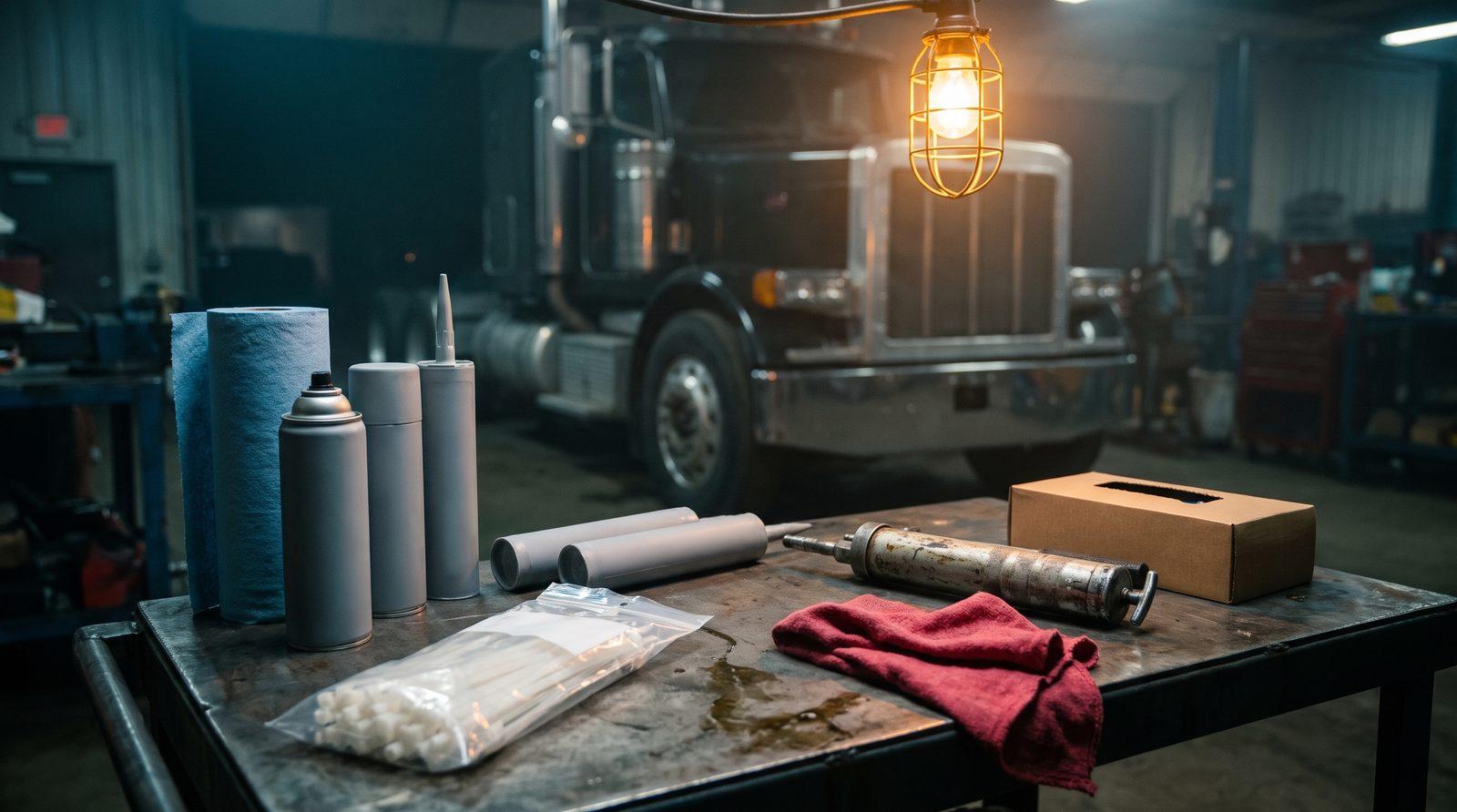
What a shop supplies charge should cover, how to set it from your own costs, flat fee vs percent of labor with a cap, how to show it so customers don't push back, state rules and fleet accounts.
A shop supplies charge covers the consumables a repair uses up that are too small to list, like rags, cleaner, sealant and grease. Set it from your own costs as a flat fee or a percent of labor with a cap. Show it as a plainly named line on the estimate and invoice, and check your state's rules.
A shop supplies charge pays for the small stuff a repair uses up that's too small to list part by part: rags, cleaner, sealant, grease and zip ties. You can charge it as a flat fee per repair order or as a percent of labor with a cap. Show it as its own plainly named line on the estimate and the invoice. Put the terms in writing with fleet accounts. Check your state's rules first, because some states limit the charge.
This guide is for owners and service writers at diesel and heavy-equipment shops. The dollar figures are made-up examples. This is general information, not legal or tax advice.
What shop supplies cover
Shop supplies are consumables. They get used on the job and can't be used again. On a diesel or heavy-equipment repair, that usually means:
- Shop towels and rags
- Brake and parts cleaner and degreaser
- Thread locker, sealant, RTV and anti-seize
- Chassis and dielectric grease
- Zip ties, electrical tape, heat shrink and small clamps
- Floor absorbent and gloves
- Small hardware bought by the box
Some things don't belong in the supplies charge:
- Real parts. A sensor, a hose or a jug of coolant goes on the ticket as a part, with its own markup.
- Overhead. Tools, equipment, electricity and office supplies are the cost of running the shop. The Texas Comptroller's guide for repair shops leaves those four out of its definition of consumable supplies.
- Disposal. Used oil, coolant and filters can be their own environmental line. In California, disposal charges tied to the job must be itemized separately on the estimate and the invoice, with the shop's EPA identification number (Bureau of Automotive Repair, Write It Right).
Why shops charge them
The cost is real. A shop goes through cases of cleaner and boxes of towels every month, and the bill grows with the hours your techs work. You can recover it three ways.
| Method | Upside | Downside |
|---|---|---|
| Build it into the labor rate | Simplest invoice. Nobody asks about it. | Your posted rate looks higher next to shops that add a line. |
| A separate supplies line | Your labor rate stays comparable, and the cost is in the open. | Draws questions if it looks like a junk fee. |
| Itemize every supply used | The most exact. | Slow to write up. Nobody wants to bill three zip ties. |
Set the number from your own costs
Start from your own books.
- Add up what you spent on consumables last year. Example: $24,000.
- Divide by the labor hours you billed. Example: 6,000 hours.
- That's your supplies cost per billed hour. Example: $4.00.
At a $100 door rate, $4.00 an hour is 4 percent of labor (example numbers). Round up a little for price increases and waste. Then recheck it once a year.
Flat fee vs percent of labor with a cap
A flat fee is the same charge on every repair order. It's easy to explain. It overcharges a 20-minute job and undercharges an engine job. It fits best when most of your tickets are about the same size.
A percent of labor with a cap grows with the work. The cap keeps a big job from carrying a fee that looks ugly. A small minimum covers the quick jobs.
Example only: a $15 flat fee next to 5 percent of labor with a $5 minimum and a $40 cap.
| Labor on the ticket | Flat $15 | 5% of labor, $5 min, $40 cap |
|---|---|---|
| $60 | $15 | $5 (5% is $3, so the minimum applies) |
| $300 | $15 | $15 |
| $800 | $15 | $40 |
| $3,000 | $15 | $40 (5% is $150, so the cap applies) |
Base a percent on labor, not on parts or the whole ticket. Supplies get used while the tech works, so labor tracks them better. Parts already carry their own markup. At least one public buyer refuses a fee figured on the total job, as the fleet section shows.
Show it on the invoice so customers don't push back
A supplies charge the customer saw coming is easier to defend than a surprise line with a vague name.
- Call it what it is. "Shop supplies" reads plain. "Misc" or "Sundries" reads like a junk fee.
- Put it on the estimate. The customer should see it before they approve the work. See how diesel repair shops get paid faster for written approvals.
- Show the rule. "Shop supplies (5% of labor, max $40)" answers the question before it's asked.
- Use the same rule on every ticket. Write down who can waive it and when.
- Post the policy. Put it on the estimate footer, at the counter and on your website.
- Keep it apart from other fees. Disposal and travel get their own lines.
- Give service writers one sentence. "That covers the rags, cleaners, sealant and grease we used on your truck, and it's capped at $40."
- Leave it off where it doesn't fit. A no-charge warranty or comeback invoice and a parts-only counter sale don't need it.
State rules and sales tax
Rules vary by state. Two examples from state agencies:
- California. The Bureau of Automotive Repair's Write It Right guide (updated January 2026) says "Charging for items generally noted as shop supplies or miscellaneous parts is prohibited." A shop may charge for the supplies used on that vehicle if they're on the estimate and itemized on the invoice. The same guide defines repair work to exclude repairs under a commercial business agreement and roadside services, so fleet accounts and road calls may be treated differently. Ask a California lawyer how it applies to your work.
- Texas. The Texas Comptroller says a shop that separately states a charge for consumable supplies used directly on a motor vehicle repair must collect sales tax on the total charge for parts and consumables. On a lump-sum invoice, the shop pays the tax when it buys the supplies.
Ask your accountant how your state taxes a supplies line. The parts markup and inventory guide covers sales tax on parts and labor.
Fleet accounts
Fleet managers read every line, and a fee that shows up on one truck's invoice and not the next gets flagged. Settle it in the contract before the first truck rolls in.
- Pick one method for the account. A flat fee per repair order, a percent of labor with a cap, folded into the labor rate or itemized.
- Public buyers may set limits. The City of Santa Fe's 2021 bid for automotive and heavy-equipment service says a contractor "must be able to justify these fees and cannot add a % based on total job price."
- List it on the rate sheet. Put it next to the labor rate and the parts markup, so the fleet sees the whole price in one place.
- Change it at renewal. If your supplies cost went up, raise the fee at renewal and put it in writing.
For the rest of the deal, see how to win fleet maintenance contracts or price one with the free Fleet Contract Calculator.
Where MetaFleet fits
In MetaFleet, the customer approves each repair on the estimate from a link. Your charges are in front of them before the work starts. Invoices go out with a card or ACH pay link and flow to QuickBooks Online. See invoicing and payments or book a demo.
Sources (3)
- California Bureau of Automotive Repair: Write It Right, documentation and authorization requirements for automotive repair dealers (updated January 2026)
- Texas Comptroller: Pub. 94-113, Motor Vehicle Repairs, Remodels and Maintenance
- City of Santa Fe, NM: Invitation to Bid 21/41/B, Automotive/Heavy Equipment Parts, Supplies, and/or Services (2021)
FAQs
Ready for invoices customers don't argue with?
See MetaFleet in Action
Book a demo and we'll walk through how your shop builds estimates and invoices today, show you where MetaFleet fits, and build a simple rollout plan your team can follow.
Not ready to talk? Try a free shop tool
Related Articles

Net 30 Terms for Fleet Customers: How Repair Shops Offer Them and Still Get Paid
What net 30 means for a repair shop, what terms cost you to carry, when to offer them to fleet accounts, how to check credit and set limits, and how statements, late fees and pay links get you paid on time.

Truck Repair Invoice: What to Include, Plus a Free Template
Every field a diesel truck or heavy-equipment repair invoice should carry, from the unit number and engine hours to complaint, cause and correction lines, plus road-call extras, the mistakes that hold up payment and a free template.