
How to Cut Technician Paperwork
How diesel and heavy-equipment shops cut tech paperwork: list every form a job makes, keep only hours, finding, fix and parts, and write once on the phone at the truck.
Techs hate paperwork that repeats and nobody reads. List every form a job makes and drop the ones with no reader. Ask techs for hours, what they found, what they did and the parts used, and let them record it once, on the phone, while they're at the truck.
You cut tech paperwork by making the tech write each thing once, on the phone, at the truck. Cut what nobody reads, put the rest on the job as it happens, and let shorthand notes and voice do the typing. What stays is the hours, the finding and the fix. The office turns that into the estimate and the invoice.
This guide is for owners, service managers and lead techs at diesel and heavy-equipment shops. It is about the techs' side of the paper. For writing one good repair line, see complaint, cause and correction.
Why techs hate paperwork
- It happens at the end of the day, from memory, when they want to go home.
- They write the same thing three times: on a ticket, in a note and on a time sheet.
- Typing on a phone with greasy hands is slow.
- Nobody tells them what happens to it, so it feels pointless.
The result is thin notes, missing hours and an office that has to chase the tech. That costs you billed hours and makes it hard to defend an invoice.
Step 1: List every piece of paper a job makes
Follow one job from the call to the invoice and write down every form, note, text and photo. Next to each, write who reads it and what they do with it. If nobody reads it, stop asking for it. If someone reads it but could get it from somewhere else, take it off the tech.
Step 2: Decide what the tech must record
Keep this list short. For most jobs it is:
- Hours. Start, stop and what the time was for.
- What they found. The cause, with a photo if it helps.
- What they did. The fix and how they checked it.
- Parts used. What came off the shelf or the truck.
- Inspection results, when it's an inspection job.
Prices, totals, tax, terms and customer details are the office's job. A tech who never types a price makes fewer mistakes with them.
Step 3: Write once, at the truck
- Same screen for everything. One place on the phone for hours, notes, photos and parts.
- Write while it's fresh. A line when the cause is found is better than a paragraph at 4:30.
- Photos instead of words. A photo of the part and the VIN plate beats a sentence.
- Shorthand is fine. Let the tech write "r/r lh rear brake chamber, air leak" and have the office or the software turn it into a clean line.
- Talk instead of typing. Voice notes are quicker than thumbs on a phone with gloves on.
- Don't copy it by hand. If the hours are on the job, nobody should also fill in a time sheet for the same hours.
Step 4: Close the loop
Show techs where their notes ended up: on the estimate a customer approved, on an invoice that got paid, in a warranty claim you won. Fix mistakes with a short word, not a lecture. When the notes are used, the habit holds.
Step 5: Check it weekly
- How many jobs closed with no hours on them?
- How many notes are one word long?
- How often does the office call a tech to ask what was done?
Sort the misses by kind of job. If one kind keeps missing, the form is wrong. For how the numbers connect to pay and billing, see technician efficiency vs productivity.
Where MetaFleet fits
In MetaFleet, techs work the whole job from any phone browser, with nothing to install, and new jobs reach them by text. They can talk their notes into the tech app instead of typing, and the AI turns shorthand notes into clean repair lines. The tech enters the hours and the shop adds the parts. They can read a VIN, plate or odometer from a photo. See the tech's side, how AI write-ups work or book a demo.
FAQs
Ready for techs who write it once?
See MetaFleet in Action
Book a demo and we'll walk through how your techs record jobs today, show you where MetaFleet fits, and build a simple rollout plan your team can follow.
Not ready to talk? Try a free shop tool
Related Articles
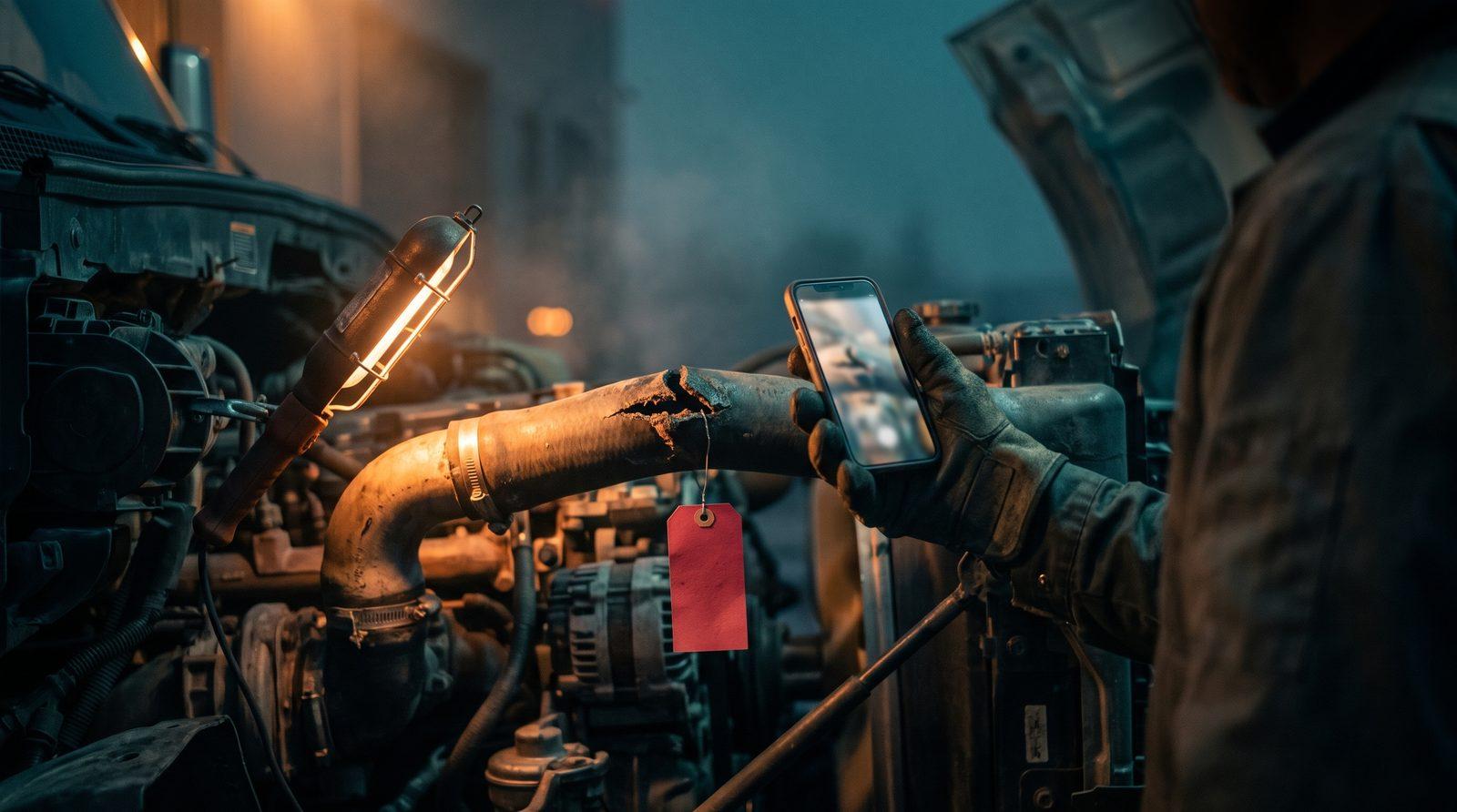
Complaint, Cause, Correction: How to Write a Repair Line
How to write the 3 Cs on a repair order, with weak and better examples from semis and yellow iron, why fleets and warranty reviewers push back on vague lines, how techs capture it on a phone and a checklist for every line.
What Breaks When You Hire Tech #4 (And How to Fix It)
Most diesel shops hit the wall around the third or fourth technician, when verbal updates, sticky notes and one person's memory stop keeping up. What breaks, what it costs, and three systems that fix it.