
Complaint, Cause, Correction: How to Write a Repair Line
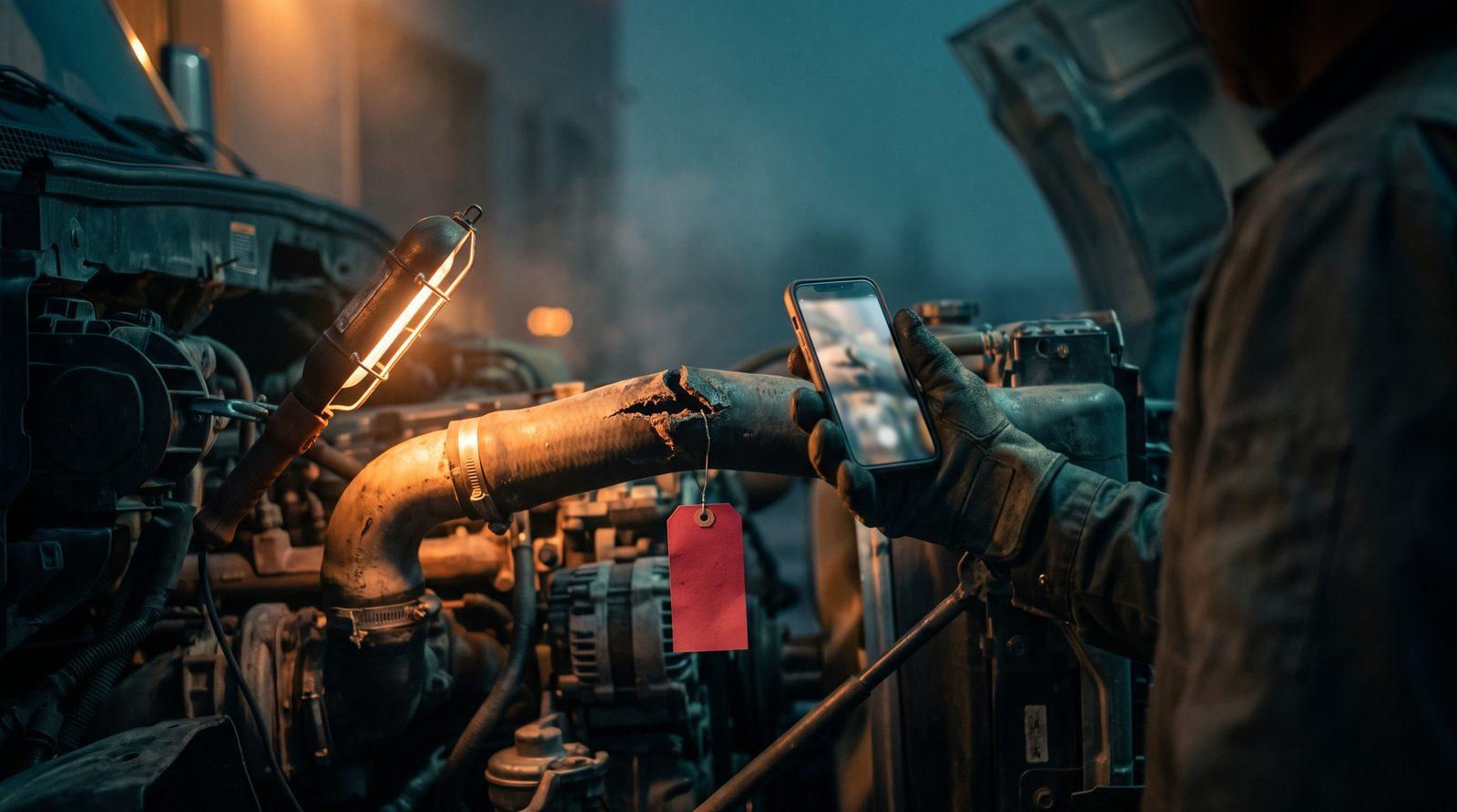
How to write the 3 Cs on a repair order, with weak and better examples from semis and yellow iron, why fleets and warranty reviewers push back on vague lines, how techs capture it on a phone and a checklist for every line.
Complaint, cause, correction, the 3 Cs, is how to write a repair line. The complaint is what the customer reported, the cause is what the tech found and how, and the correction is what the tech did and how the fix was checked. Name each part and its position, and give every problem its own line.
Complaint, cause, correction, the 3 Cs, is how you write a repair line: what the customer said was wrong, what the tech found, and what the tech did to fix it. Write each part in plain words, with the facts a stranger would need: the part, where it is on the unit, the test that proved it and how you checked the fix. Give every problem its own line.
This guide is for techs, service writers and shop owners doing diesel truck and heavy-equipment work. It covers each C with weak and better examples, why fleets and warranty reviewers push back on vague lines, how to capture it on a phone at the truck and a checklist to keep by the bay door. Every example here is made up.
The 3 Cs in plain words
| Part | What it answers | Who usually writes it |
|---|---|---|
| Complaint | What did the customer say was wrong? | Service writer or dispatcher, from the call or the drop-off |
| Cause | What did the tech find, and how? | The tech, after diagnosis |
| Correction | What did the tech do, and how was it checked? | The tech, after the repair |
The three parts together make one repair line on the repair order. The same line carries over to the estimate and then the invoice, so whatever the tech writes is what the customer reads and pays for.
Complaint: write what the customer reported
The complaint is the symptom, in the customer's words. Leave the diagnosis to the tech. Even when the driver says "I think it's the alternator," write down what they saw and heard.
A good complaint says what happens, when it happens and anything the driver saw on the dash:
- Weak: "Won't start."
- Better: "Driver reports the truck cranks slowly and won't start on cold mornings. Starts after a jump. No warning lights."
Ask the questions that fill the gaps. Does it happen hot or cold? Loaded or empty? At idle or on a grade? Is a light on, and which one? Write down a fault code if the driver can read it off the dash.
Keep one complaint per line. "Air leak, low coolant and a light out on the trailer" is three lines, each with its own cause and correction.
Cause: write what you found and how you found it
The cause is the tech's finding. A strong cause names the part, says where it is on the unit and says how the tech proved it.
- Weak: "Bad batteries."
- Better: "Load tested all four batteries. Two failed. Found corrosion on the main ground cable where it bolts to the frame."
Things worth writing in the cause:
- The test you ran and what it showed, such as a pressure test, a load test or a leak check with soapy water.
- Readings as numbers, like voltage, air pressure or temperature.
- Fault codes with their SPN and FMI, and whether each one was active or inactive.
- The position: which axle, which side, which cylinder, which hose.
- Why it failed, if you can tell. A hose that rubbed through on a bracket will do it again unless the correction deals with the rubbing.
Correction: write what you did and how you checked it
The correction is the repair and the proof that it worked. Name every part you replaced, with its position, and say what you did to confirm the fix.
- Weak: "Replaced batteries."
- Better: "Replaced the two failed batteries. Cleaned and resealed the ground cable connection at the frame. Retested all four batteries and the starting system. Truck starts normally."
If you found something else that needs work, don't bury it in the correction. Give it a new line, get it approved and note it as recommended if the customer declines.
Three full examples, weak and better
A semi with an air leak (made-up example)
Weak: Complaint: air leak. Cause: bad chamber. Correction: replaced.
- Complaint: Driver reports an audible air leak at the rear of the tractor when the brakes are applied.
- Cause: Built air and applied the brakes. Found air leaking at the driver-side brake chamber on the rear drive axle. Confirmed with soapy water.
- Correction: Replaced the driver-side brake chamber on the rear drive axle. Built air and rechecked with the brakes applied. No leaks. Checked brake stroke on that axle and it's within limits.
A trailer with marker lights out (made-up example)
Weak: Complaint: lights out. Cause: wiring. Correction: fixed wiring.
- Complaint: Driver reports the marker lights on the driver side of the trailer are out. Listed on the DVIR.
- Cause: Power present at the nose box. Found a corroded, broken harness connector at the second marker light on the driver side, cutting power to the lights behind it.
- Correction: Replaced the connector and sealed it with heat shrink. Checked every marker and clearance light on the trailer. All working.
An excavator on a job site (made-up example)
Weak: Complaint: hydraulic leak. Cause: hose. Correction: replaced hose.
- Complaint: Operator reports hydraulic oil spraying near the boom and the boom is slow to raise.
- Cause: Found the hose from the control valve to the boom cylinder worn through where it rubs the boom. Hydraulic oil low.
- Correction: Made and installed a new hose with matching fittings. Added a hose guard at the rub point and re-clamped it. Topped off the hydraulic oil with the grade the machine calls for. Ran the boom through full travel. No leaks and boom speed is normal.
Each better line answers the questions a fleet manager or a warranty reviewer would otherwise call you about.
Why fleets and warranty reviewers reject vague lines
The person paying wasn't at the truck. The repair line is all they have.
Fleets keep repair records. Under 49 CFR 396.3, motor carriers must keep records for each vehicle they control for 30 consecutive days, including a record of inspection, repairs and maintenance showing the date and nature of the work. Your repair line often becomes that record. "Repaired as needed" doesn't say what the nature was. The guide to 49 CFR Part 396 for repair shops covers the rest of what fleets owe and what to hand back.
DVIR defects need a clear fix. When a driver lists a defect on a DVIR, 49 CFR 396.11 says the carrier or its agent must certify it was repaired, or that repair was unnecessary, before the vehicle runs again. A correction that names the defect and the fix makes that easy. See DVIR requirements and certifying repairs.
Some fleets code every repair. VMRS, the Vehicle Maintenance Reporting Standards, is kept by the American Trucking Associations' Technology & Maintenance Council. It has code keys for the work a tech accomplished and for the apparent failure of a part. A clear cause and correction is what makes a repair easy to code.
Warranty reviewers need proof. A reviewer decides whether a failure is covered without ever seeing the part. They need the complaint, the test that proved the failure, the part numbers, and the miles or hours on the unit. Programs set their own rules for claims, so read the warranty manual for the brands you work on. Keep the failed part tagged until the claim closes.
Vague lines cost you later, too. When the truck comes back, the next tech reads the history first. A clear line saves them from starting over and helps you sort out a comeback.
How techs can capture it on a phone
The best repair lines get written at the truck, while the tech can still see the part. Notes written at the end of the day come out short. Some habits that help:
- Start from the complaint on the job. If it's unclear, ask the driver or the office before you start.
- Take photos as you go. The failed part, where it was on the unit, the data plate and the code on the scan tool screen. A photo of a split hose settles most questions before they're asked.
- Write readings down when you take them. Voltage, pressure and temperature as numbers.
- Keep notes short and keep the facts. "LR drive chamber leaking, soap tested" is shorthand a service writer can clean up. "Fixed leak" leaves nothing to clean up.
- Record mileage or engine hours when you start the job.
- Open a new line for each new problem, and get it approved before you do the work.
- Enter your hours on each line as you finish it.
A checklist for every repair line
- One problem per line.
- Complaint in the customer's words, with when it happens.
- Cause names the part, its position on the unit and the test that proved it.
- Fault codes written with SPN and FMI, active or inactive.
- Correction names each part replaced or repaired.
- Correction says how the fix was checked.
- Mileage or engine hours on the job.
- Hours entered on the line.
- Extra work approved before it was done.
- Photos attached.
- Declined repairs listed as recommended.
- No line that only says "checked," "fixed" or "as needed."
The same lines go on the invoice. For every other field it needs, see the truck repair invoice guide and free template.
Where MetaFleet fits
In MetaFleet, each repair line has a complaint and a cause and correction. Techs work the job from any phone browser and can type findings short and plain. The AI turns the shorthand into clean repair lines a customer can read. When the office enters a complaint with more than one problem, the AI splits it into one repair line per problem and points out lines that are missing a detail. Anyone on your team can edit a line, and depending on your settings, the office checks the estimate before the customer sees it. People enter the hours and the parts. Snap the VIN, plate or odometer and MetaFleet reads it, and techs can log mileage or engine hours from the job. Suggested labor hours and parts on repair lines are on the wayComing soon. See AI repair write-ups for diesel shops, or watch the AI on one road call in MetaFleet in action.
FAQs
Ready for repair lines nobody has to call about?
See MetaFleet in Action
Book a demo and we'll walk through how your techs write up jobs today, show you where MetaFleet fits, and build a simple rollout plan your team can follow.
Not ready to talk? Try a free shop tool
Related Articles
What Breaks When You Hire Tech #4 (And How to Fix It)
Most diesel shops hit the wall around the third or fourth technician, when verbal updates, sticky notes and one person's memory stop keeping up. What breaks, what it costs, and three systems that fix it.

Truck Repair Invoice: What to Include, Plus a Free Template
Every field a diesel truck or heavy-equipment repair invoice should carry, from the unit number and engine hours to complaint, cause and correction lines, plus road-call extras, the mistakes that hold up payment and a free template.