
DOT Inspection Requirements, DVIRs and PM Programs: A Guide for Shops and Fleets
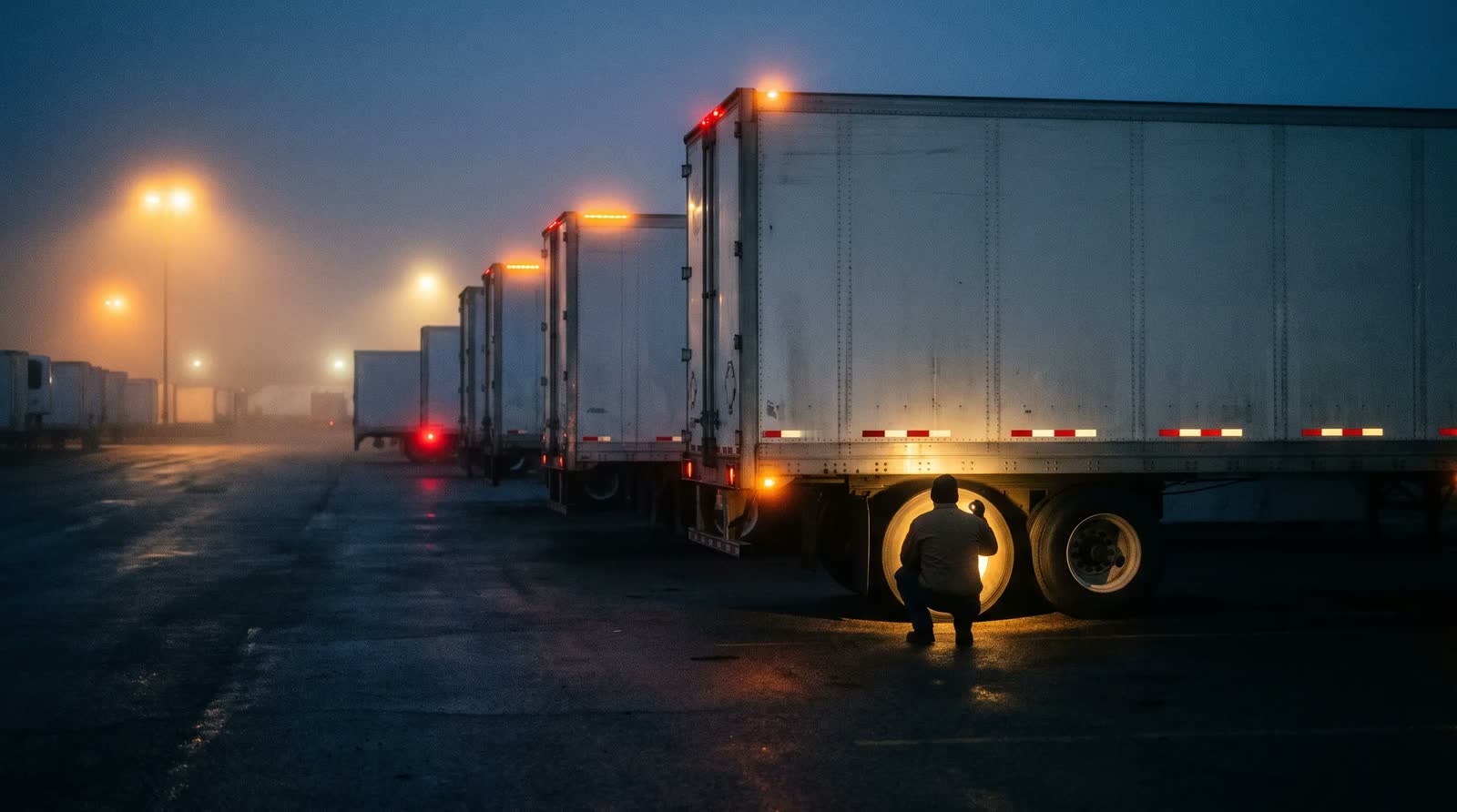
What federal rules ask of a shop that inspects and maintains trucks, whether you serve fleets or run a fleet's own shop: who can perform and sign the annual inspection, what the report must contain, how DVIR repairs are certified, how long records are kept, and how to build a PM program, with every rule tied to its eCFR section.
The short answer: under 49 CFR Part 396, every commercial truck, trailer and converter dolly in interstate service needs an annual inspection to the Appendix A standard by a qualified inspector, with a signed report kept 14 months. A DVIR defect likely to affect safety or cause a breakdown (396.7(a)) must be repaired before the vehicle runs again (FMCSA's guidance adds any defect that fails Appendix A), and every listed defect must be certified on the DVIR as repaired or as not needing repair. Carriers must keep a PM schedule, but federal rules set no PM intervals for trucks and trailers.
This guide is for diesel and heavy-equipment repair shops, mobile or in-shop, that inspect fleet trucks, and for maintenance managers who run a fleet's own shop. Either way, your inspector signs what an auditor reads. It's general information, not legal advice.
Who the rules cover and who is responsible
Part 396 applies to commercial motor vehicles in interstate commerce, and it binds a shop working on them as the carrier's agent as well as the fleet.
A commercial motor vehicle (CMV) is a highway vehicle in interstate commerce rated at or weighing 10,001 lb or more, meeting the passenger thresholds, or hauling placarded hazmat (390.5). That can include a shop's own service truck. States may exempt intrastate vehicles under 26,001 lb, other than placarded hazmat and vehicles designed or used to carry 16 or more people, including the driver (350.305), so check your state. The FMCSRs also don't apply to some operations at all, such as school bus operations, government-operated vehicles and fire and rescue vehicles in emergencies (390.3T(f)). Our reading: off-highway equipment isn't a CMV, so the OEM and the owner set its PM.
The carrier must "systematically inspect, repair, and maintain" its vehicles, or have it done (396.3(a)). The rules also bind its "agents, representatives, and employees directly concerned with the inspection or maintenance" (396.1(a)). If you run a fleet's own shop, both columns below are yours.
| Duty | Carrier | Outside shop, as agent |
|---|---|---|
| PM program | Owns it | Performs the work it's hired for |
| Annual every 12 months | Owns it | Performs it |
| Annual report | Keeps it 14 months | Inspector prepares and certifies it |
| DVIR repair certification | Owns it | May repair and certify as agent |
| Inspector qualification evidence | Keeps it | May hold copies for the carrier |
The DOT annual inspection: what the rule requires
Every commercial vehicle, including each trailer and converter dolly, must pass an inspection to the Appendix A standard at least once every 12 months, with proof on the vehicle (396.17).
Each trailer and dolly needs its own annual
Under 396.17(a), "the tractor, semitrailer, and the full trailer (including the converter dolly if so equipped) must each be inspected." Each needs its own proof unless one document clearly identifies all of them (FMCSA guidance on 396.17, Q3). So 10 tractors and 15 trailers means 25 annuals a year.
Appendix A is the standard (it used to be Appendix G)
Appendix A to Part 396, Minimum Periodic Inspection Standards, has 15 categories: brakes, coupling devices, exhaust, fuel, lighting, safe loading, steering, suspension, frame, tires, wheels and rims, windshield glazing, wipers, motorcoach seats and rear impact guard. It was Appendix G until Oct 14, 2021 (86 FR 57060), and some FMCSA pages still use the old name.
Proof on the vehicle, and how long it lasts
The vehicle carries the report or a decal (396.17(c)). Per FMCSA guidance, a decal shows the inspection date, not the due date (Q2), and the driver must be able to produce it (Q4). Month and year is the minimum; write the full date so the anniversary is clear.
The end-of-month count in 396.17(f) covers only State-program inspections, and FMCSA hasn't said more, so our cautious reading is that the 12 months in 396.17(c) end on the anniversary date.
If the vehicle falls under a mandatory State program that FMCSA has found as effective as 396.17, the carrier must use it and follow the State's recordkeeping (396.23; FMCSA guidance on 396.21, Q1). We found no current federal list, so check with your state.
Who can perform and sign an annual inspection
Either the fleet's own qualified inspector (396.17(d)) or an outside business acting as the fleet's agent. Under 396.17(e), the carrier may have "a commercial garage, fleet leasing company, truck stop, or other similar commercial business perform the inspection as its agent, provided that business operates and maintains facilities appropriate for commercial vehicle inspections and it employs qualified inspectors, as required by § 396.19."
What makes an inspector qualified
Under 396.19, the carrier must make sure each annual inspector:
- understands Part 393 and Appendix A and can identify defective components;
- has mastered the methods, procedures, tools and equipment;
- has completed a Federal- or State-sponsored training program or holds a State or Canadian Province inspector certificate, or has "a combination of training or experience totaling at least 1 year."
Through Jan 15, 2030, an ATA-listed training program based on TMC Recommended Practices can stand in for that year, if the program was on ATA's list on the certificate date (90 FR 4830). The exemption also covers the 1-year route for brake inspectors, who have separate rules (396.25).
A garage may hold the qualification evidence, but the carrier must produce it on request or can be cited (FMCSA guidance on 396.19, Q1). Keep a file per inspector and give fleet customers copies.
Don't sign what you can't see
An inspector may not certify a vehicle if they "cannot see all components required" (FMCSA guidance on 396.17, Q12). A required record that's "incomplete, inaccurate, or false" can draw up to $1,584 a day, capped at $15,846 (Part 386, Appendix B).
The open question for mobile shops
If you run a mobile shop, one phrase matters. A business inspecting as the carrier's agent must operate and maintain "facilities appropriate for commercial vehicle inspections" (396.17(e)). The regulation doesn't define that phrase, and we found no FMCSA guidance on whether a service truck at a customer's yard meets it. The rule names fixed locations (a garage, leasing company or truck stop) but also allows "other similar commercial business," so it doesn't rule mobile work in or out.
Before you sell on-site annuals, ask your FMCSA division office or your state's commercial vehicle enforcement agency, and keep the answer in writing. A fleet's own qualified employee inspecting under 396.17(d) isn't subject to that phrase. This is a question to confirm, not legal advice. More on starting a mobile diesel repair business.
What the annual inspection report must contain
The inspector who did the work prepares and certifies the report. Under 396.21(a), it must:
- identify who performed the inspection;
- identify the motor carrier operating the vehicle;
- give the inspection date;
- identify the vehicle;
- list the components inspected and the results, "including the identification of those components not meeting the minimum standards";
- certify "the accuracy and completeness of the inspection."
There's no required form (FMCSA guidance on 396.17, Q11); FMCSA posts an example report. If an outside shop did the inspection, the carrier must get a copy on demand (396.21(b)(3)), so that copy can't wait.
DOT annual inspection checklist
- Inspector's name
- Carrier name (address recommended)
- Inspection date
- Vehicle ID: unit number, VIN or serial, make, year
- Every Appendix A category, with a result for each
- Any failed component named, with its repair date once fixed
- Certification of accuracy and completeness, signed
- One report per unit, or one document that clearly lists every unit
- Proof on the vehicle: the report, or a decal showing the inspection date (not the due date), where the report is kept, the vehicle ID if it isn't marked, and the pass certification
- A copy to the carrier
- The inspector's qualification evidence on file
- Nothing certified that couldn't be seen
To plan annuals and PM across a fleet, try the free DOT Inspection & PM Planner. It emails you the DOT Inspection & PM Program Kit.
A roadside Level I inspection is not the annual
A clean Level I roadside inspection, or the CVSA decal that comes with it, does not satisfy the annual.
FMCSA's guidance: "No, a CVSA Level I or Level V inspection is not equivalent to the Federal periodic inspection requirements" (on 396.23, Q1). A 2016 rule removed the violation-free roadside option (81 FR 47722), though forum threads still quote the old wording.
| Annual (396.17) | CVSA Level I (roadside) | |
|---|---|---|
| Who | Qualified inspector: the fleet's own, or an agent shop (396.19) | CVSA-certified enforcement inspector |
| Standard | Appendix A to Part 396 | CVSA North American Standard Out-of-Service Criteria |
| Covers | Vehicle components, each unit in the combination | Driver and vehicle |
| Proof lasts | 12 months | CVSA decal, only with no critical violations, for no more than three consecutive months |
| Counts as the annual? | - | No |
DVIRs: what drivers report and what the shop signs
Drivers report defects in writing at the end of the day. The carrier or its agent (your shop or the fleet's own team) repairs defects that affect safety, could cause a breakdown or fail Appendix A, and certifies the DVIR before the truck runs again.
The report covers at least 11 items (396.11(a)(1)): service brakes including trailer brake connections, parking brake, steering mechanism, lighting devices and reflectors, tires, horn, windshield wipers, rear vision mirrors, coupling devices, wheels and rims, and emergency equipment.
No defect, no report (396.11(a)(2)(i)): the rule for property carriers since Dec 18, 2014 (79 FR 75437) and passenger carriers since 2020 (85 FR 50787). The driver signs any report. A carrier operating only one CMV is exempt from 396.11 (so are driveaway-towaway operations and private passenger carriers, nonbusiness), but not from 396.3, 396.13 or 396.17.
The defect-to-repair sign-off
- The driver reports; the carrier or its agent triages.
- Before the vehicle runs again, repair any defect likely to affect safe operation (396.11(a)(3)(i)), likely to cause a breakdown (396.7(a)), or that fails Appendix A (FMCSA guidance on 396.11, Q6). "Repair unnecessary" is only for a reported item that isn't any of those, such as a misreport or cosmetic damage. This is where you get repair approvals in writing.
- Before the vehicle runs again, certify on the DVIR itself, on every copy, that the defect has been repaired or that repair is unnecessary (396.11(a)(3)(ii); FMCSA guidance on 396.11, Q12). A separate shop log doesn't count.
- The next driver reviews and signs the last DVIR, when one was required (396.13), and may sign the repair certification as the carrier's agent if satisfied the work was done (FMCSA guidance on 396.13, Q1).
- Keep the DVIR and both certifications 3 months (396.11(a)(4)).
- Log the repair's date and nature in the maintenance record (396.3(b)(3), for vehicles the carrier controls 30 or more consecutive days).
Since Mar 23, 2026, the rules say outright that DVIRs and the driver's review "may be created and maintained in electronic format" (396.11(a)(6), 396.13(d); 91 FR 7893). FMCSA says that was already allowed; the rule made it explicit. Electronic records must "accurately reflect the information otherwise required" (390.32).
Roadside inspections work similarly (396.9): a truck placed out of service (OOS) can't run until repaired, and the carrier certifies within 15 days that every violation noted has been corrected. Since Jul 22, 2026, it returns the form only "if requested by the issuing State agency" (91 FR 37053) and keeps a copy 12 months. If you handle emergency and roadside dispatch, send your repair record fast.
Building a PM program that holds up in an audit
Federal rules require a systematic program and records, not specific PM intervals. (The fixed clocks are the annual inspection and, on buses, a check of pushout windows, emergency doors and emergency door marking lights at least every 90 days, 396.3(a)(2).) The fleet sets the intervals, and the engine maker's schedule is the place to start.
FMCSA says intervals "are fleet specific and, in some instances, vehicle specific... to be determined by the motor carrier" (guidance on 396.3, Q1). In-house or outsourced, the records are the same. For each vehicle the carrier controls 30 or more consecutive days, 396.3(b) requires:
- Vehicle ID: company number if marked, make, serial number, year, and who furnished it if the carrier doesn't own it. "Tire size" was dropped Jul 21, 2026 (91 FR 45653).
- A schedule: "a means to indicate the nature and due date of the various inspection and maintenance operations to be performed." Auditors ask for this.
- A history of inspections, repairs and maintenance with "their date and nature."
Vehicles must also be properly lubricated and free of oil and grease leaks (396.5).
A/B/C tiers and engine makers' intervals
PM tiers are industry practice, not regulation. As a rule of thumb, PM-A is lube, oil and filter plus a safety walk-around; PM-B adds brake, suspension, electrical and driveline checks; PM-C adds major services and a deep chassis inspection. Published intervals contradict each other (we found PM-B anywhere from 15,000 to 100,000 miles), so plan from the engine maker's spec for the duty cycle (a rule of thumb, not a federal requirement).
| Engine | Oil change interval (engine maker's spec) |
|---|---|
| Detroit DD15 Gen 5 | 35,000 mi or 750 hr (severe), 45,000 mi or 1,000 hr (short-haul), 60,000 mi (long-haul), 75,000 mi (efficient long-haul) |
| Cummins 2024 X15 Efficiency | 25,000 / 50,000 / 60,000 / 75,000 mi by fuel-economy band; drop to the next lower interval when idle plus PTO time exceeds 40% |
Cummins' 2020 X15 brochure listed lower mid-band numbers, so check the manual for the model year. Detroit's triggers are miles or hours, "whichever occurs first." As a rule of thumb, vocational units need hour meters, and trailers and low-mileage units run on calendar PM.
Set up the program
- List every unit the fleet controls 30 or more days, with the 396.3(b)(1) fields.
- Set triggers and intervals per unit from the engine manual for its duty cycle (rule of thumb).
- Write tiers as task lists, and fold Appendix A items into the tier that lines up with the annual, often a PM-C around month 11 (rule of thumb).
- Write the schedule: the nature and due date of each operation (396.3(b)(2)).
- Log every job's date and nature (396.3(b)(3)).
- Track each unit's annual separately (396.17).
- Close the loop with DVIRs and roadside reports (396.11, 396.9).
- Tighten intervals where failures repeat (rule of thumb).
For a repair shop, a documented PM program is what fleets buy. More on winning fleet maintenance contracts. To price it per truck per month, try the free Fleet Maintenance Contract Calculator, or see all our free tools for diesel and heavy-equipment shops.
Records: how long to keep what
Most of these records are short-lived, which is why accuracy matters more than volume.
| Record | Keep for | Rule |
|---|---|---|
| DVIR, repair certification and driver review | 3 months | 396.11(a)(4) |
| Annual inspection report | 14 months, where the vehicle is housed or maintained | 396.21(b)(1) |
| Maintenance records (vehicle ID, schedule, inspection and repair log) | 1 year, and 6 months after the vehicle leaves the carrier's control | 396.3(c) |
| Annual inspector qualification evidence | While inspecting for the carrier, plus 1 year | 396.19(b) |
| Brake inspector qualification evidence | While in that role, plus 1 year | 396.25(e) |
| Certified roadside inspection report | 12 months | 396.9(d)(3) |
Electronic records are fine (390.32; FMCSA guidance on 396.3, Q4), and if a vehicle isn't housed or maintained at a single location, records kept elsewhere must be produced within 2 working days of an FMCSA request (Q5). Our reading: the shop that holds a fleet's records is hard to replace. More on keeping a fleet account through renewal.
Where trucks get caught
Brakes, tires and lights drive roadside out-of-service orders, and missing paperwork drives audit findings.
At CVSA's 2026 International Roadcheck (May 12-14), inspectors across North America put 19% of vehicles out of service in 54,575 inspections, and 24.8% at Level I. Brake-related violations were 39.1% of vehicle OOS violations, tires 20.9% and lights 11.9%.
A valid annual decal doesn't exempt a truck from roadside inspection; it "only precludes a citation for a violation of § 396.17" (FMCSA guidance on 396.17, Q8). Without proof, expect that citation.
In a safety audit (Part 385, Appendix B), using a vehicle not periodically inspected (396.17(a)) and missing maintenance records (396.3(b)) are critical violations. Failing to correct OOS defects on a DVIR (396.11(a)(3)) is acute, and one occurrence fails a new entrant's audit (385.321).
Common mistakes
- Treating a Level I or a CVSA decal as the annual.
- Inspecting only the tractor.
- Putting the due date on the decal.
- Signing for components nobody saw.
- Readjusting automatic slack adjusters without finding the cause, which Appendix A calls "not acceptable."
- "Keep records 12 months," or citing Appendix G.
What changed recently
Check older checklists and forms against these seven changes.
| Date | Change | Source |
|---|---|---|
| Jul 22, 2016 | A clean roadside inspection no longer counts as the annual | 81 FR 47722 |
| Oct 14, 2021 | Appendix G became Appendix A to Part 396 | 86 FR 57060 |
| Jan 16, 2025 | ATA training programs can stand in for the 1-year requirement for annual and brake inspectors, through Jan 15, 2030 | 90 FR 4830 |
| Mar 23, 2026 | Electronic DVIRs made explicit in 396.11 and 396.13 | 91 FR 7893 |
| Mar 23, 2026 | No rear license plate lamp needed on a truck tractor while towing a trailer (393.11, which Appendix A's lighting item points to) | 91 FR 7871 |
| Jul 21, 2026 | "Tire size" dropped from 396.3 vehicle records | 91 FR 45653 |
| Jul 22, 2026 | Roadside reports go back to the state only if it asks | 91 FR 37053 |
Where MetaFleet fits
MetaFleet runs inspections and PM for the shop doing the work. Build DVIR-style and annual inspection forms in the template designer, or upload the PDF form you already use and AI rebuilds it. Techs fill it in on a phone with photos and signatures, and it prints back onto your original form or as a clean PDF. A failed item becomes a repair on the same job, with optional advisor approval.
PM programs come from your own service tasks, run by miles, hours or months, and cover one truck or a whole fleet. Each truck keeps its own PM log. Customers get reminders 14, 7, 3 and 1 days before service is due, plus emails about trucks not yet on a program, and PM, inspection and repair appointments share one calendar. See inspection and preventive maintenance software for diesel shops, or book a demo.
Sources (49)
All sources checked October 12, 2026.
- eCFR: 49 CFR 390.5, definitions (commercial motor vehicle; 390.5 is suspended indefinitely and 390.5T is in force)
- eCFR: 49 CFR 390.3T, general applicability and exceptions
- eCFR: 49 CFR 396.7, unsafe operations forbidden
- Federal Register: 91 FR 7871 (Feb 19, 2026; effective Mar 23, 2026), license plate lamps
- eCFR: 49 CFR 390.32, electronic documents and signatures
- eCFR: 49 CFR 350.305, intrastate variances
- eCFR: 49 CFR 396.1, scope
- eCFR: 49 CFR 396.3, inspection, repair, and maintenance
- eCFR: 49 CFR 396.5, lubrication
- eCFR: 49 CFR 396.9, inspection of motor vehicles in operation
- eCFR: 49 CFR 396.11, driver vehicle inspection reports
- eCFR: 49 CFR 396.13, driver inspection
- eCFR: 49 CFR 396.17, periodic inspection
- eCFR: 49 CFR 396.19, inspector qualifications
- eCFR: 49 CFR 396.21, periodic inspection recordkeeping
- eCFR: 49 CFR 396.23, equivalent to periodic inspection
- eCFR: 49 CFR 396.25, qualifications of brake inspectors
- eCFR: Appendix A to Part 396, minimum periodic inspection standards
- eCFR: 49 CFR 385.321, safety audit automatic failure
- eCFR: Appendix B to Part 385, critical and acute violations
- eCFR: Appendix B to Part 386, civil penalties
- Federal Register: 79 FR 75437 (Dec 18, 2014), DVIR no-defect rescission
- Federal Register: 81 FR 47722 (Jul 22, 2016), general amendments, roadside option removed
- Federal Register: 85 FR 50787 (Aug 18, 2020), passenger carrier no-defect DVIRs
- Federal Register: 86 FR 57060 (Oct 14, 2021), technical amendments, Appendix G to Appendix A
- Federal Register: 90 FR 4830 (Jan 16, 2025), ATA inspector qualification exemption
- Federal Register: 91 FR 7893 (Feb 19, 2026; effective Mar 23, 2026), electronic DVIRs
- Federal Register: 91 FR 37053 (Jun 22, 2026; effective Jul 22, 2026), completed inspection report disposition
- Federal Register: 91 FR 45653 (Jul 21, 2026), technical amendments, tire size removed
- FMCSA: guidance on 396.3, Q1, "systematic" and intervals
- FMCSA: guidance on 396.3, Q4, computerized records
- FMCSA: guidance on 396.3, Q5, where records are kept
- FMCSA: guidance on 396.13, Q1, driver signing the repair certification
- FMCSA: guidance on 396.17, Q2, inspection date vs due date
- FMCSA: guidance on 396.17, Q3, documentation for each vehicle in a combination
- FMCSA: guidance on 396.17, Q4, decal location
- FMCSA: guidance on 396.17, Q8, decals and roadside inspection
- FMCSA: guidance on 396.17, Q11, no required form
- FMCSA: guidance on 396.17, Q12, certifying components the inspector can't see
- FMCSA: guidance on 396.19, Q1, a third party holding qualification records
- FMCSA: guidance on 396.21, Q1, State program recordkeeping
- FMCSA: guidance on 396.23, Q1, a Level I is not the annual
- FMCSA: Example Annual Periodic Vehicle Inspection Report (PDF)
- CVSA: 2026 International Roadcheck results (Aug 25, 2026)
- CVSA: inspection levels
- CVSA: inspection decals
- Detroit: DD15 Gen 5 spec sheet (DDCPWR 15904)
- Cummins: 2024 X15 Efficiency Series, Bulletin 6491587
- Cummins: 2020 X15 Productivity Series brochure
FAQs
Ready to get out of dispatch chaos?
See MetaFleet in Action
Book a call and we'll walk through your current workflow, show you where MetaFleet fits, and build a simple rollout plan your team can actually follow.
Not ready to talk? Try a free shop tool
Related Articles

How to Keep a Fleet Maintenance Contract: The Retention Playbook
Fleets rarely fire a shop over one bad repair - they leave after months of quiet frustration, and grade you on a vendor scorecard at renewal whether you built one or not. Here's the retention system: the monthly service scorecard, the quarterly QBR, the 49 CFR 396 records that make you un-fireable, and how to win the renewal (and raise your price).
Parts Markup and Inventory for Diesel Repair Shops: The Complete Guide
A 30% markup is a 23.1% margin, and parts money leaks after the sale too. How heavy-duty shops price parts with a matrix and fleet cost-plus, and keep inventory, cores and service-truck stock from tying up cash.