
Semi Truck PM Service: What's in PM A, B and C, a Checklist, and What Drives the Cost
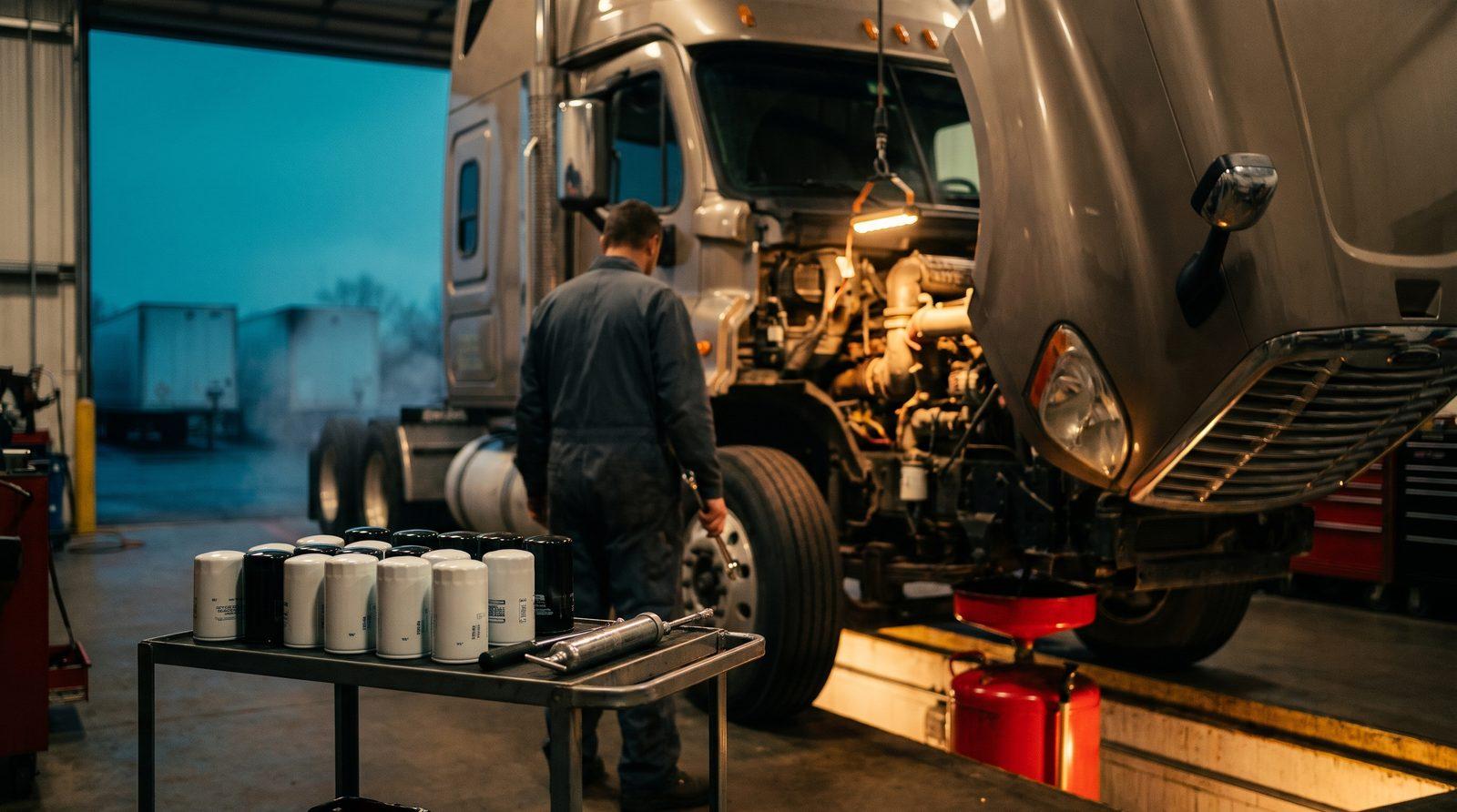
What PM A, B and C mean for a semi truck, an example checklist for each level, how to set intervals from the makers' schedules, and what makes one PM cost more than another, for shops and fleets.
PM A, B and C are levels of preventive maintenance for a semi truck, and each level includes the one below it. PM A is usually an oil and filter change with grease and a safety check. B and C add filters, fluid tests and deeper inspections. The letters are a convention, so the maker's schedule sets the intervals.
PM A, B and C are levels of preventive maintenance for a semi truck. Each level includes everything in the one below it and adds more. PM A is usually an oil and filter change with grease and a safety check. B and C add filters, fluid tests and deeper inspections. The letters are a shop and fleet habit, so the maker's schedule sets when each one is due.
This guide is for shops that do PM work on Class 8 trucks and for fleets that run their own. It explains what the levels mean, gives an example checklist for each, covers how to set intervals, and walks through what makes one PM cost more than another. There are no prices here, because a PM's cost depends on the truck, the level and your shop.
What PM A, B and C mean
No federal rule defines a PM A, B or C. Federal rules require motor carriers to inspect, repair and maintain their trucks on a system and keep records of it, and they leave the schedule to the carrier. The guide to DOT inspection requirements and PM programs covers what those rules ask for.
The A, B and C levels grew up as a way to group the work:
- PM A is the short, frequent service.
- PM B is PM A plus more filters and checks.
- PM C is PM B plus the longer-interval fluid changes and adjustments.
That's where the agreement ends. One fleet's PM B is another fleet's PM C. Some use PM 1, 2 and 3, and some add a D. Engines from different makers need different things at different miles. So for every fleet you serve, write down what's in each level for their trucks, and have them sign off on it.
An example PM checklist
Here's what each level often looks like. Treat it as a starting point, not a standard. Check every item and interval against the engine, truck, transmission and axle makers' manuals for the trucks you service.
PM A: the basic service
- Change engine oil and filter, when the maker's drain interval calls for it
- Grease every chassis fitting: kingpins, tie rod ends, slack adjusters, driveline joints, fifth wheel
- Check fluid levels: coolant, power steering, DEF, transmission and axles where you can check them
- Inspect belts, hoses and clamps for wear, cracks and leaks
- Check tires for pressure, tread depth and damage, and check wheels and lug nuts
- Check brakes: lining thickness, pushrod stroke, slack adjusters and air leaks
- Check lights, reflectors, horn, wipers and mirrors
- Inspect steering and suspension: drag link, springs, air bags and mounts
- Look for exhaust leaks and check exhaust mounts
- Check batteries, cables and charging
- Drain air tanks and check the air dryer is working
- Road test, then write up anything that needs repair
PM B: PM A plus
- Replace fuel filters and service the water separator
- Test coolant strength and condition
- Check the engine air filter restriction gauge and replace the filter if it's due
- Measure brake linings and drums or rotors, and look for wheel seal leaks
- Check axle and transmission oil levels and look for leaks
- Pull an oil sample for analysis, if the fleet uses oil analysis
PM C: PM B plus
- Change transmission and axle oil on the maker's interval
- Replace the engine air filter, cabin filter and air dryer cartridge
- Service the cooling system the way the engine maker calls for
- Adjust valves when the engine maker's schedule says they're due
- Replace the DEF filter and crankcase filter where the truck has them
- Inspect wheel bearings, driveline, engine mounts and frame more closely
Many fleets line up the annual DOT inspection with a PM B or C, so the truck comes in once. Trailers and reefer units need their own PM programs on their own makers' schedules.
How to set PM intervals
Set intervals from the makers' maintenance schedules, then adjust for how each truck is used.
- Start with the manuals. The engine maker sets oil, filter and valve intervals. The truck maker sets chassis service. The transmission and axle makers set their own fluid intervals.
- Match the duty cycle. Makers' schedules often change with how hard a truck works. Long highway runs, short local routes and heavy hauling can each get a different interval.
- Use miles, hours or months, whichever comes first. A truck that idles a lot or runs a PTO wears its engine without adding miles, so engine hours matter. A truck that sits needs service on a calendar.
- Check, don't guess. Some fleets use oil analysis to confirm a drain interval fits their trucks. Stay inside what the engine maker allows.
- Keep the records. Each PM should show the date, the mileage or hours and what was done. A fleet's warranty claim or a DOT audit may ask for them.
Once each level has an interval, the levels fall into a pattern. For example, a truck might get a PM A at each stop, with every third stop a PM B and every sixth a PM C. The real pattern comes from that truck's schedules.
What drives the cost of a PM
Two semis can get a PM B on the same day and get very different bills. Here's why:
- The level. A PM C takes more parts and more labor time than a PM A.
- Oil and filters. How much oil the engine holds, the oil spec the maker calls for, and whether you use maker-brand or aftermarket filters.
- Labor time. The truck's layout, how many grease fittings it has, and how easy the filters are to reach.
- Your labor rate. And for mobile PMs, the service call and travel charge. The guide to mobile diesel mechanic rates breaks those down.
- What you find. Worn brakes, a leaking seal or a cracked hose are repairs. Quote them on their own, with the customer's approval, so the PM price stays the PM price.
- Add-ons. An annual inspection, a DPF service, a reefer unit or a trailer done on the same visit.
- Volume and location. Ten trucks at one yard on one visit cost less per truck to serve than ten trucks at ten addresses.
- Disposal and supplies. Used oil, filters, coolant and rags all cost money to handle.
- Age and condition. Rusted fittings, seized drain plugs and old leaks add time.
How shops price PM work
Fleets like a PM price they can plan around. A common setup:
- A flat price per level, per truck type. One price for a PM A on a given engine, another for a PM B, and so on.
- A written list of what's included. Every item in each level, so the fleet knows what they're paying for.
- Findings quoted on their own. Anything the PM turns up becomes a repair line with its own approval.
- A price for each add-on. Inspections, trailers and reefers priced on their own, so they can be added to a visit.
PM work is steady, booked work, and it gives a fleet a reason to stay with you. The guide to winning fleet maintenance contracts covers how to price and pitch a full PM program.
Where MetaFleet fits
In MetaFleet you build PM programs from your service tasks, so PM A, B and C can each be their own program with their own task list. Set each one due by miles or by months, then enroll one truck or a whole fleet. MetaFleet tracks what's due on every enrolled truck, keeps a PM history for each one and reminds the customer before service comes due. Fleets can book PM visits from the customer portal. The tech runs the inspection on your own form, a failed item becomes a repair with one tap, and the customer approves it from a link. See inspection and preventive maintenance software for how programs, reminders and the portal work.
FAQs
Ready to run PM programs your fleets can count on?
See MetaFleet in Action
Book a demo and we'll walk through how you schedule and track PMs for your fleet customers today, show you where MetaFleet fits, and build a simple rollout plan your team can follow.
Not ready to talk? Try a free shop tool
Related Articles
Fleet Maintenance Spreadsheet: What to Track, a Free Template, and When to Move Off It
The tabs and columns a fleet maintenance spreadsheet needs, from the unit list and PM schedule to DVIR defects and annual inspection dates, a free Excel template with the formulas built in, how to keep it accurate and the signs it's time for software.

How Repair Shops Cut Downtime for Fleet Customers
Where truck downtime really comes from at a repair shop, from waiting to be seen to approvals, parts and comebacks, and the fixes a shop controls: first-call triage, PM catch-up, pre-approval limits, stocked parts, photos, clear repair lines and downtime reports.