
Why Tribal Knowledge Is Killing Your Shop's Growth (And How to Fix It)
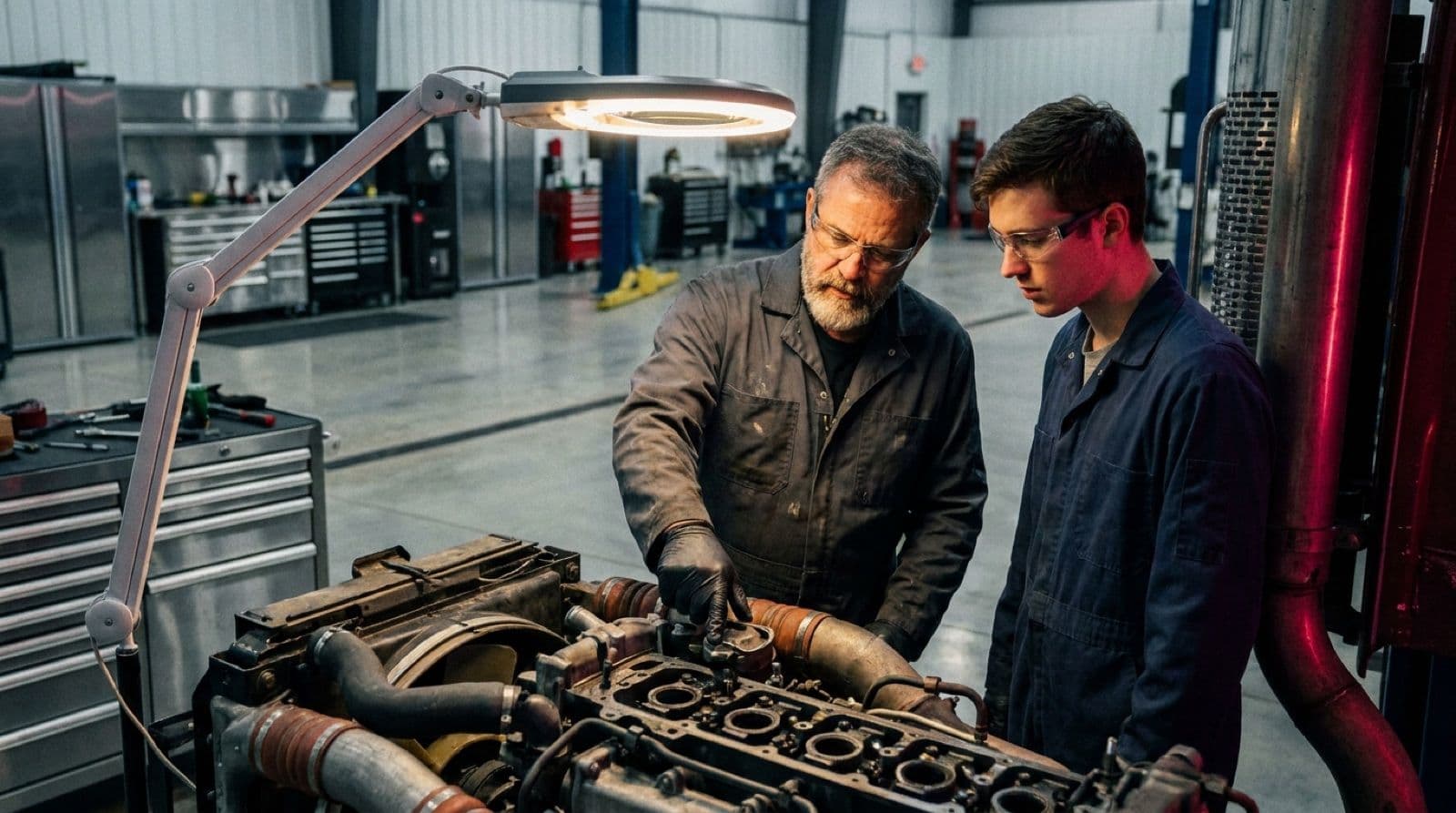
Most diesel shops hit the wall around tech number three or four. Verbal updates and sticky notes don't scale. Here are three systems that create clarity without killing the operator-led culture.
Most diesel shops hit the wall around tech number three or four. When it is just you and a couple of techs, verbal updates and sticky notes feel manageable. Add one more person and suddenly things start to break.
Jobs get assigned verbally and then forgotten. Invoices pile up because admins are waiting on updates. Customers start calling for ETAs and you do not have an answer. The chaos grows, and you feel like the harder you work the less control you have.
This is not a leadership problem. It is a systems problem.
The Hidden Cost of Chaos
Tribal knowledge and ad-hoc processes cost shops more than most owners realize.
- Even 15 minutes wasted per tech per day adds up. Across a five-tech shop that is about 325 hours a year (15 minutes x 5 techs x 260 workdays), or roughly $32,000 of billable time at about $100 an hour. That is a MetaFleet estimate, and you can run the same math on your own shop.
- One small-business survey found owners spend about 36 percent of their time on admin tasks. That is nearly two days a week not spent growing the business.
- A common rule of thumb says replacing an employee costs one-half to two times their annual pay. At the BLS median diesel tech wage of $61,770 (May 2025), that is roughly $31,000 to $124,000 for a single technician. Unclear expectations and poor communication are common complaints among techs.
The most dangerous systems are the ones that only live in someone's head.
Why Tribal Knowledge Does Not Scale
Relying on memory and verbal updates might work when the shop is small. Once you try to scale, it becomes a liability.
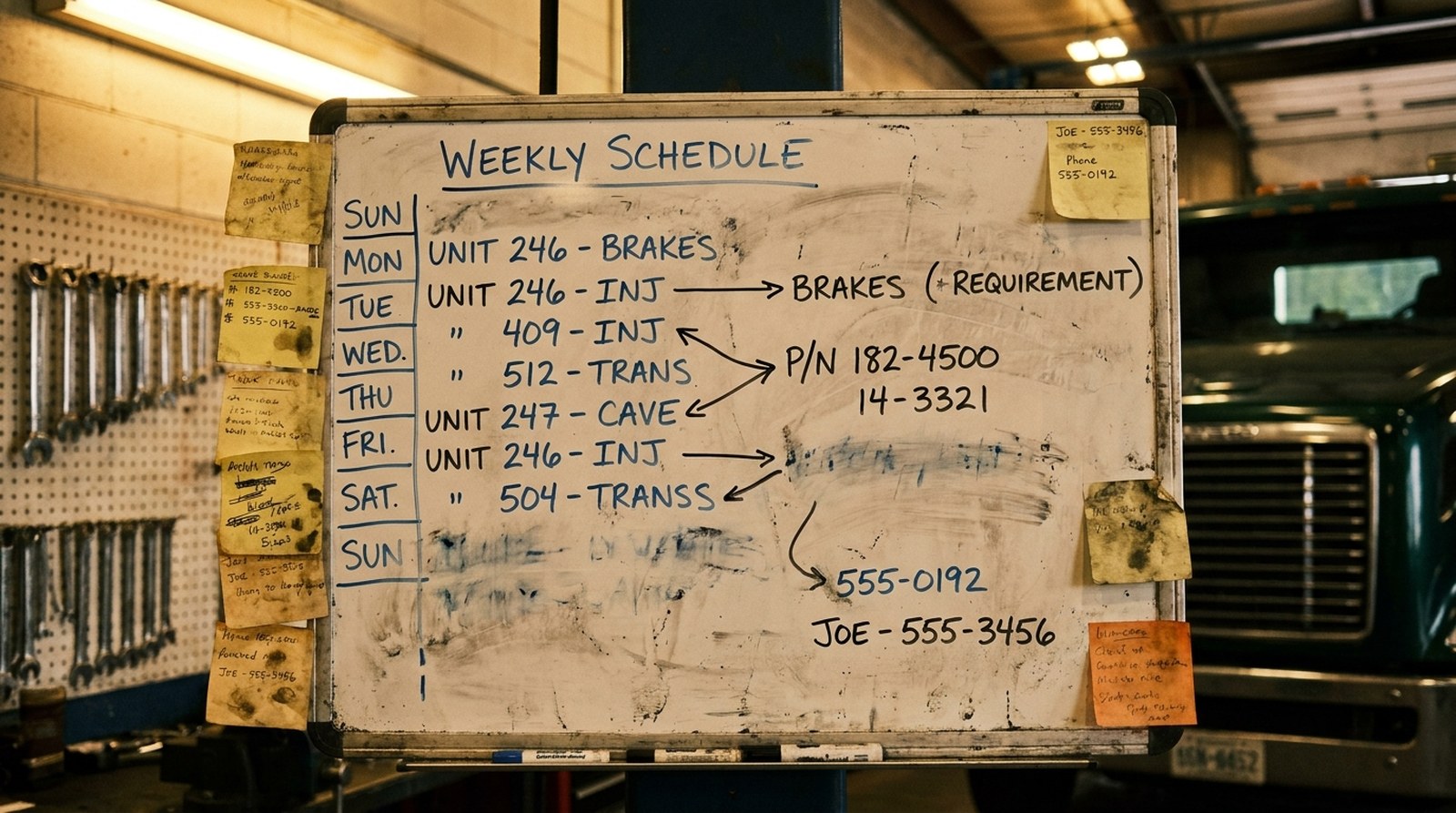
- Customer-specific invoice steps live in one admin's head.
- Yearly COI or tax form renewals get forgotten until a customer flags you as non-compliant.
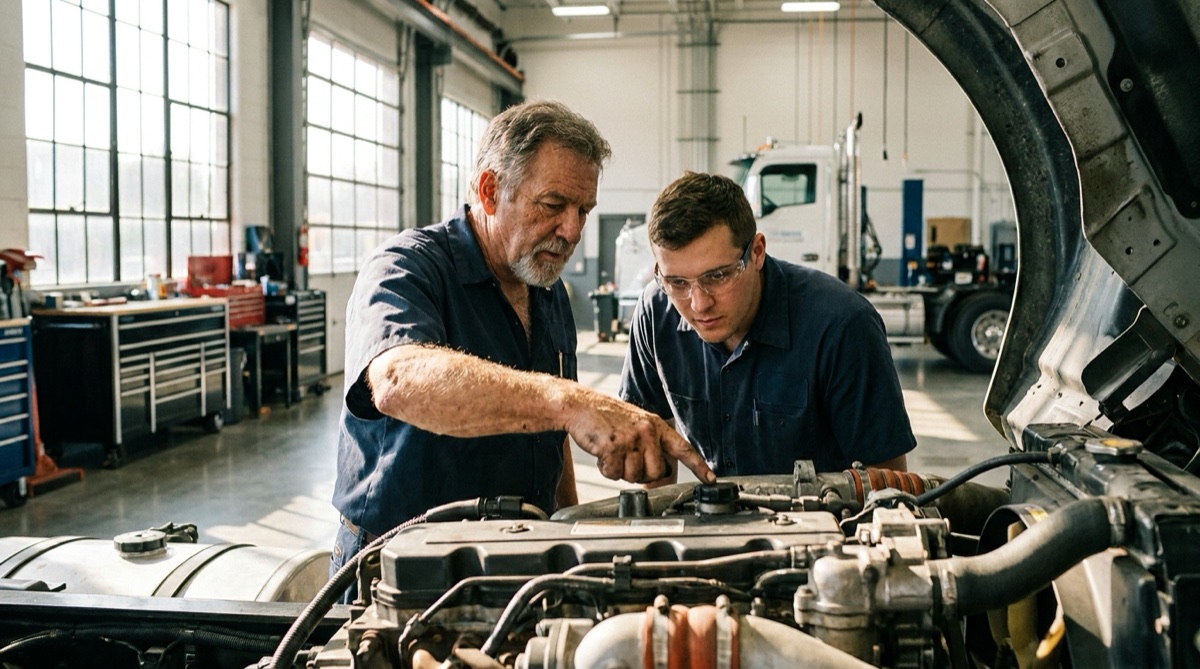
- New techs are told to just shadow someone and figure it out, which leads to weeks of confusion.
When one person leaves, the shop loses critical knowledge and the team scrambles. What worked with two techs no longer works with five.
3 Systems That Create Clarity
The good news is that the chaos is fixable. Shops that scale past tech number four consistently put three simple systems in place.
1. Shared Job Board
All jobs, techs, and statuses live in one place. It can be a whiteboard, a spreadsheet, or a digital job board. The format matters less than the commitment. If it is not visible, it does not exist.
2. Tech-Led Job Updates
Do not let admins spend their days chasing updates. Instead, require techs to mark their own job stages: On Route, Arrived, Questions or Estimates, Done. One update saves four phone calls and keeps invoicing moving.
3. Dispatch and Handoff SOPs
Write simple, repeatable procedures. Define who assigns jobs, when check-ins happen, and what responsibilities techs own - like truck maintenance. Put this into onboarding so expectations are clear from day one. Checklists like digital inspection templates turn your best tech's routine into everyone's routine.
Solution: Move beyond memory and paper. Standardize how jobs move, document it, and make sure it's visible to everyone.
Get the free Ops Clarity PlaybookFrom Chaos to Clarity
Clarity is the difference between a shop that survives and one that scales. It is what allows an owner to hire tech number four without everything breaking.
Whether you use a whiteboard or software, the key is getting the process out of heads and into a system everyone can see. MetaFleet gives you that shared view - jobs, techs, statuses, invoices - all in one place, built for exactly the moment when tribal knowledge stops working.
That is why we created the Ops Clarity Playbook. It is a no-nonsense guide that shows you exactly how to put these systems in place. Whether you use a whiteboard or software, the playbook will help you build a shop that runs with clarity instead of chaos.
Get the free playbookFAQs
Ready to get the shop out of people's heads?
See MetaFleet in Action
Book a demo and we'll walk through how jobs get passed along in your shop today, show you where MetaFleet fits, and build a simple rollout plan your team can follow.
Not ready to talk? Try a free shop tool
Related Articles
What Breaks When You Hire Tech #4
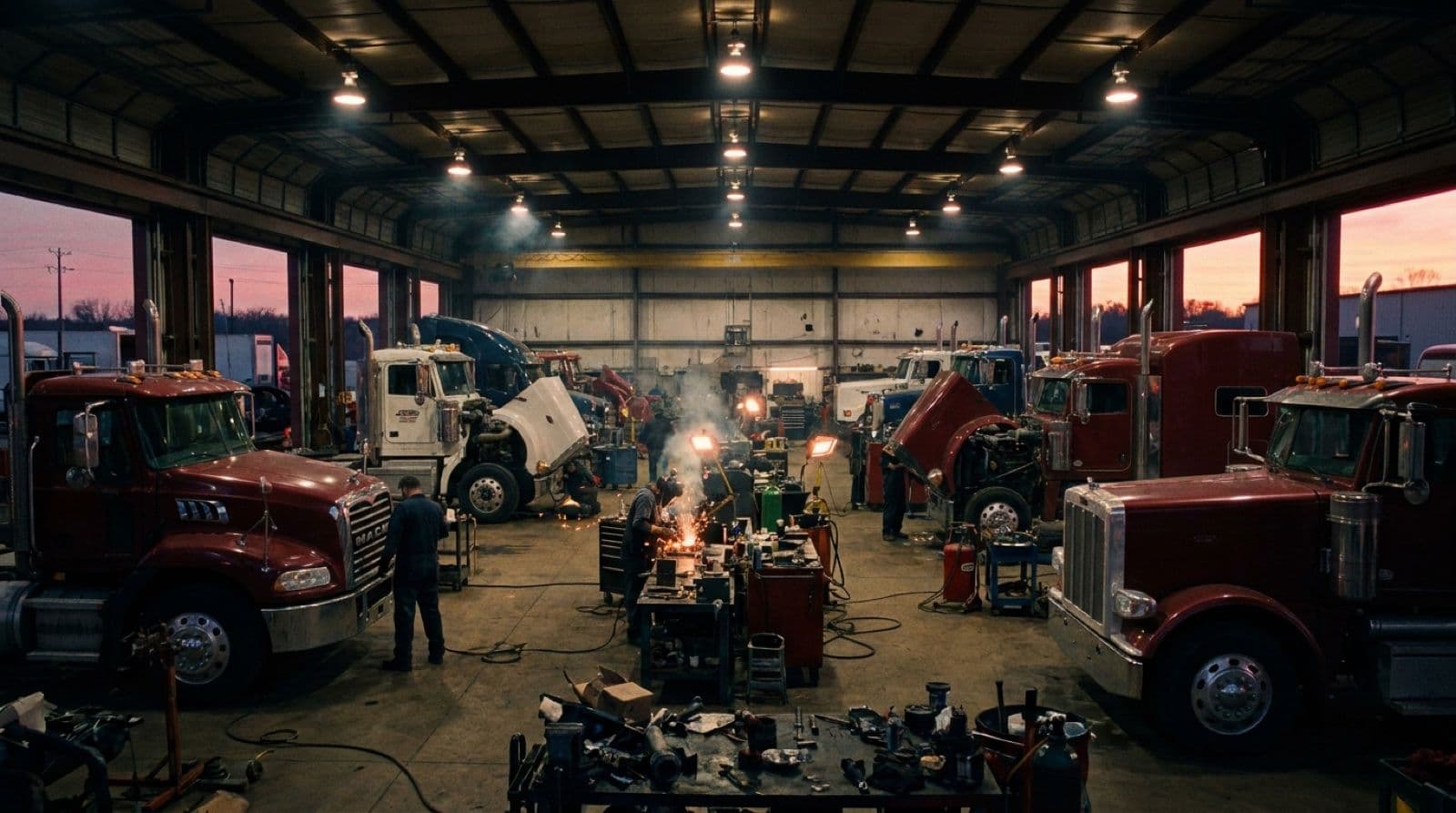
When it's just you, you know where every job stands. Add a buddy and you can still keep track. But once you hire your third or fourth technician, cracks appear fast. Here's what gives - and how to get ahead of it.
DOT Inspection Requirements, DVIRs and PM Programs: A Guide for Shops and Fleets
What federal rules ask of a shop that inspects and maintains trucks, whether you serve fleets or run a fleet's own shop: who can perform and sign the annual inspection, what the report must contain, how DVIR repairs are certified, how long records are kept, and how to build a PM program, with every rule tied to its eCFR section.