
How to Get Repair Estimates Approved Faster
How a diesel shop writes estimates customers approve: one line per problem, everything shown before the ask, photos, fast follow-up, and approval limits for fleet accounts.
Customers approve estimates quickly when each repair is its own line with a plain reason, the labor, parts and fees are visible, and a photo shows the problem. Send it as soon as the diagnosis is done and call the same day if you hear nothing. For fleets, agree on approval limits in writing first.
A repair estimate gets approved faster when the customer can read it in a minute and say yes to each line without calling you. Write each repair as its own line with a plain reason, show labor, parts and fees up front, send it right away with photos, and follow up the same day. Agree on approval limits with fleet accounts before the truck arrives.
This guide is the shop owner's how-to, for service writers and owners at diesel and heavy-equipment shops. State rules on estimates vary, and this is general information, not legal advice.
Why estimates stall
- The customer can't tell what they're buying. One big total with no detail gets a phone call, or a no.
- The estimate arrives late. The truck sits while the fleet manager waits for a number.
- It's all or nothing. A customer who can't afford the whole job says no to the whole job.
- Nobody owns the follow-up. The estimate goes out and the shop waits.
- Surprises. A fee the customer didn't expect makes the next estimate harder to sell.
Write one line per problem
Break the job up so the customer can approve, defer or decline each repair on its own. Each line gets:
- A plain name for the problem, in the words a driver would use.
- What you'll do about it.
- Labor, parts and any fee that goes with that line.
Writing the line well is its own skill. See complaint, cause and correction. Put the urgent safety items first and mark them. A fleet manager reads the top of the list.
Show everything before the ask
- Labor. The hours and the rate, or the flat price. See flat rate vs actual hours.
- Parts. Name them, and say new, used or rebuilt.
- Fees. Shop supplies, disposal and travel, each on its own line. See shop supplies charges.
- Tax. Follow your state's rules and tell the customer how it's handled.
- Time. When the truck will be ready if the work is approved today.
Add photos and the finding
A photo of the cracked hose or the worn brake lining does what a paragraph can't. Attach one to every line that needs a decision. Add what the tech found and how, in two sentences. A fleet manager who can see it doesn't need to drive over.
Send it fast, and send it where they'll read it
Send the estimate when the diagnosis is done, not at the end of the day. Use the channel the customer already answers: a link by text or email beats a PDF in a long thread. Make it easy to say yes from a phone, because that's where a fleet manager is.
Agree on limits for fleet accounts
The slowest approvals are the ones that need a call to someone who is in a meeting. Settle this in writing before the first truck:
- A dollar limit or a type of repair the shop can start on without waiting.
- Who can approve above the limit, and how to reach them.
- Whether a PO number is needed before work starts.
- What happens to a truck that's waiting on approval, and who pays for the wait.
This ties into downtime. See how repair shops cut downtime for fleet customers.
Follow up the same day
- Send it. Say in one line when you need an answer to hit the ready time.
- If there's no answer in an hour or two, call. A short call beats a long wait.
- If they approve part of it, start on the approved lines and write down what they deferred.
- If they decline, note it on the record, so the next time the truck comes in you remember it was flagged.
When the job grows
When the tech finds more once the truck is open, stop and get a new yes for the added work. Don't fold it into the invoice. Some states require a new authorization for work beyond the estimate. California's Bureau of Automotive Repair, for one, says the customer's authorization must be on record before any repairs begin, and again before any added work. That law is written for passenger vehicles and motorcycles, and it leaves out repairs done under a standing agreement with a business. Heavy trucks and fleet accounts may fall outside it. Check your own state, and keep the approval on the record either way. For getting paid after approval, see how diesel repair shops get paid faster.
Where MetaFleet fits
In MetaFleet, the customer approves each repair on the estimate from a link, and you see what's approved and what's declined. The AI turns a tech's shorthand notes into clean repair lines, and the tech enters the hours and the shop adds the parts. See how estimate approval works or book a demo.
Sources (2)
Checked on November 22, 2026.
- California Bureau of Automotive Repair: Write It Right, documentation and authorization requirements for automotive repair dealers (updated January 2026)
- California Business and Professions Code section 9880.1, definitions for automotive repair dealers, as cited by the Bureau of Automotive Repair guide above (checked November 22, 2026)
FAQs
Ready for estimates that get a yes from a link?
See MetaFleet in Action
Book a demo and we'll walk through how your shop sends estimates today, show you where MetaFleet fits, and build a simple rollout plan your team can follow.
Not ready to talk? Try a free shop tool
Related Articles
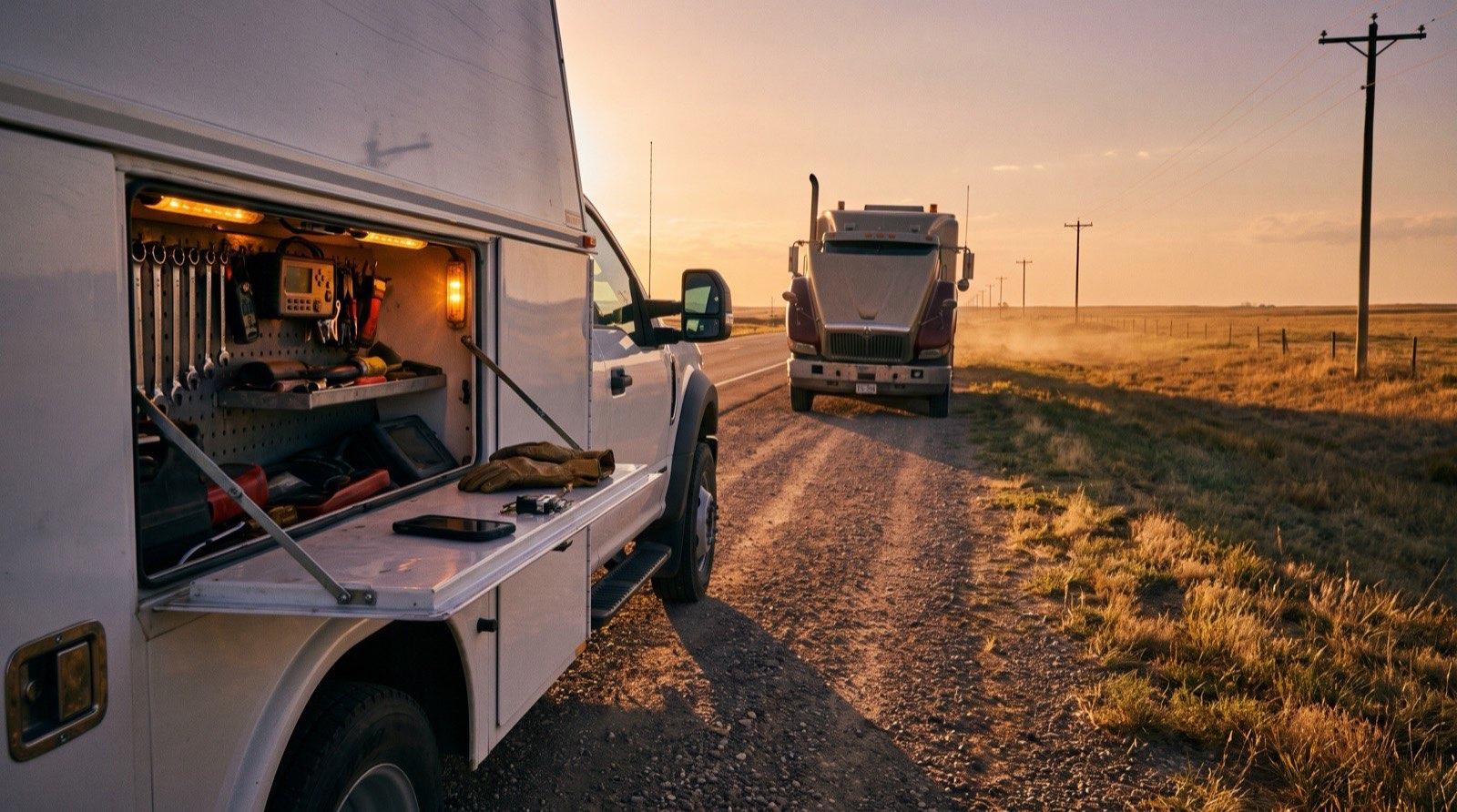
How Diesel Repair Shops Get Paid Faster
Where the days go between the last bolt and the bank, and the habits that close each gap: invoicing before the truck leaves, approvals in writing, easy payment, fleet terms and a weekly collections routine.
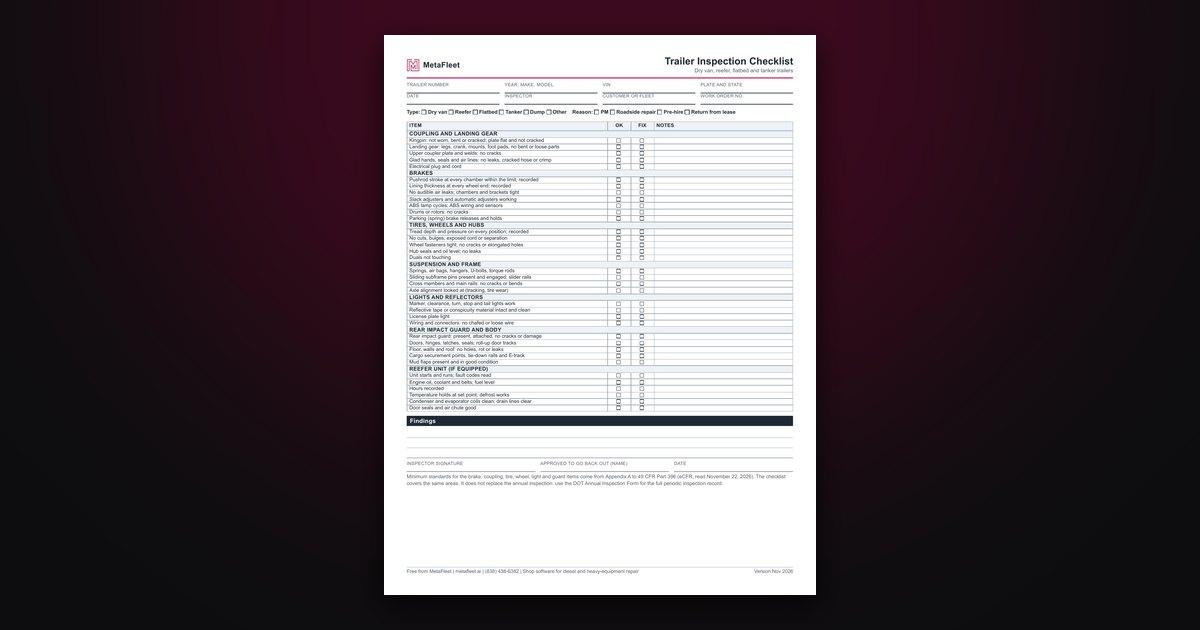
Trailer Inspection Checklist: Free Printable for Dry Van, Reefer, Flatbed, Tanker and Dump Trailers
A free printable trailer inspection checklist covering the kingpin, brakes, tires, lights, rear impact guard, body and reefer unit, with a findings box and sign-off.