
Mobile Service Truck Setup: Equipment, Layout and What to Stock
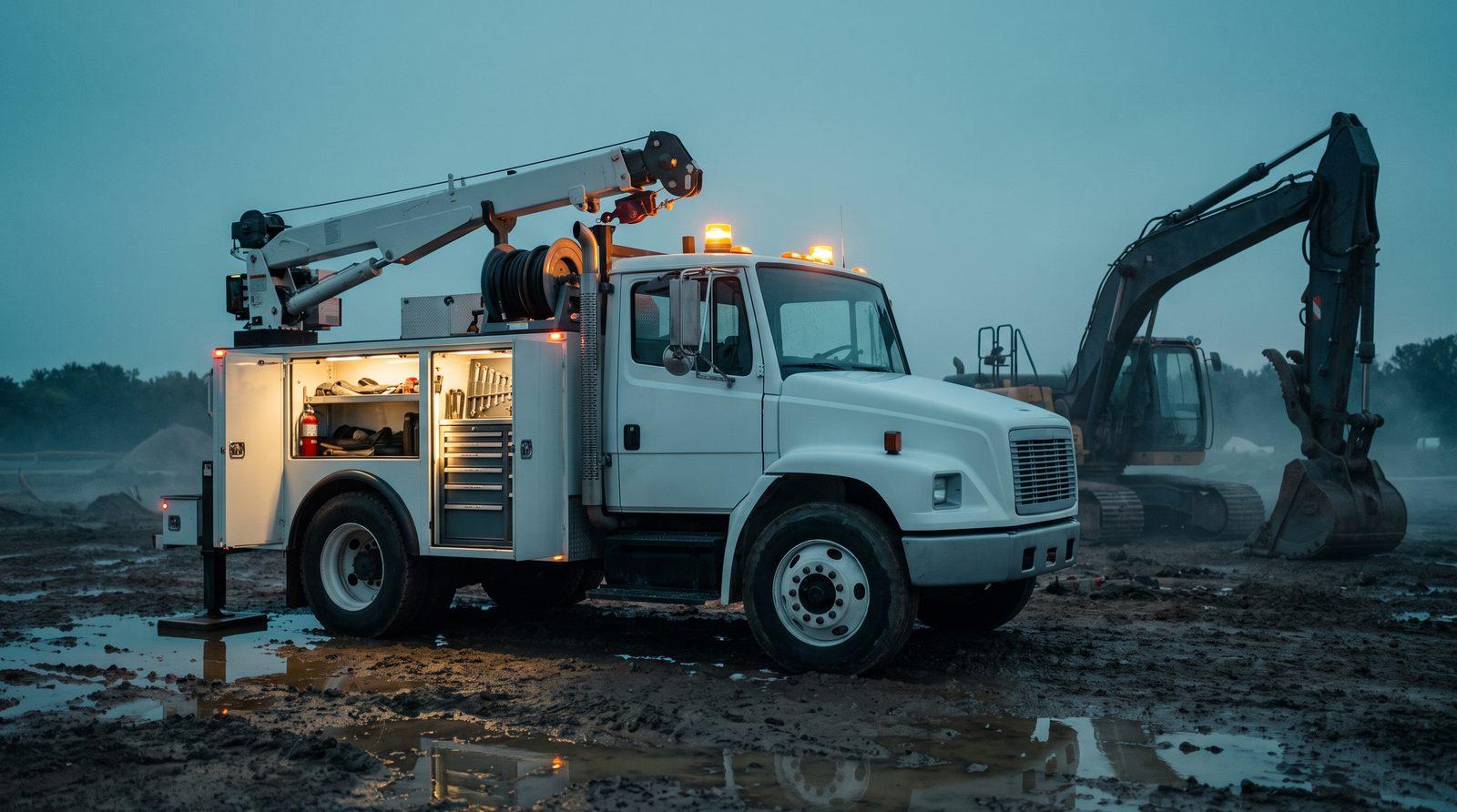
How to set up a diesel service truck for road calls on semis or yellow iron on job sites: chassis and weight ratings, service body or crane body, crane, compressor and welder basics, layout, tools, a starter stock list and restocking.
Set up a mobile service truck around the work you do most. Pick a chassis and body rated for the heaviest load you carry and lift, add the crane, air compressor and welder-generator that work needs, keep daily tools on the curb side, and stock parts and fluids for your most common calls.
Set up a mobile service truck around the work you do most. Pick the chassis and body for the heaviest load you carry and lift, add the crane, air compressor and welder-generator that work calls for, lay it out so daily tools are in easy reach, and stock parts and fluids for your most common calls.
This guide is for owners and techs building or rebuilding a service truck for diesel truck and heavy-equipment work. It covers the chassis, body and equipment, layout, tools, a starter stock list and restocking. Startup costs, insurance and the business plan are covered in how to start a mobile diesel repair business.
Start with the work you do
Before you look at trucks, write down what the truck has to do on a normal week:
- What you work on most: semis on the roadside, trucks in fleet yards, or machines on job sites.
- The heaviest part you lift, and how far from the truck you lift it.
- How much air you use, and for how long at a time.
- How much welding you do.
- How much oil, coolant, DEF and hydraulic oil you carry.
Those answers pick the chassis, the body and the equipment. A truck for tire, brake and electrical calls on semis can be lighter. A truck for yellow iron usually needs a bigger crane, more welding and more fluids, and it has to handle job site ground.
Chassis, weight ratings and the rules that come with them
Every truck has a gross vehicle weight rating (GVWR), the maximum loaded weight its manufacturer sets (49 CFR 390.5T). Each axle has its own gross axle weight rating too. Both are on the certification label by the driver's seat, usually on the driver's door edge or door frame (49 CFR 567.4). Service trucks are usually built in stages, a cab chassis plus a body and equipment, and the company that finishes the truck adds its own label (49 CFR 567.5).
Payload is the room between the GVWR and what the finished truck weighs empty. The body, crane, compressor, welder, tools, parts, fluids, fuel and the tech all come out of it. Pick the chassis and body together with your upfitter, then weigh the finished truck loaded the way it runs. Keep it under the GVWR and each axle rating.
Two federal weight lines matter for a service truck:
- 10,001 pounds. Under 49 CFR 390.5T, a vehicle used on a highway in interstate commerce with a GVWR, gross combination weight rating or actual weight of 10,001 pounds or more, whichever is greater, is a commercial motor vehicle for the federal safety rules. Those rules include the annual inspection in 49 CFR 396.17 and the emergency equipment in 49 CFR 393.95.
- 26,001 pounds. Under the CDL rules in 49 CFR 383.5, a single vehicle with a GVWR or actual weight of 26,001 pounds or more is a Group B commercial motor vehicle. A combination of 26,001 pounds or more, towing a unit rated over 10,000 pounds, is Group A.
States have their own rules for trucks that stay in-state, and whether a rule applies depends on how you use the truck. Check with your state DOT before you buy, and treat this as background, not legal advice. The startup guide covers the CDL question and the rest of the business side.
Service body or crane body
A service body has closed compartments down both sides and an open bed in the middle. It fits road calls where most of what you lift, like batteries, starters and brake parts, can be handled by hand or with a jack.
A crane body is built to carry a crane. Knapheide describes its crane bodies as built and reinforced to withstand the twisting forces a body takes during lifting. Mount a crane only on a body its maker rates for that crane, on a chassis rated for the body and crane together.
Crane basics
Size the crane for the heaviest thing you lift, at the farthest reach you'll lift it. Service cranes are rated by lifting moment in foot-pounds, which combines the weight of the load and its distance from the crane's base. Reading Truck's example: a 2,000-pound load 10 feet out is 20,000 foot-pounds. The farther out the load, the less the crane can lift, so measure the reach on your real jobs.
Every lift:
- Set the outriggers on firm, level ground. Use pads on soft job site dirt.
- Check the load chart for your crane, at the reach you need.
- Count the weight of the slings and hooks.
- Keep people out from under the load.
Follow the crane maker's manual for inspections, and train everyone who runs it.
Air compressor basics
The compressor runs impact wrenches, air tools and tire work. Compressor makers describe piston compressors as built for on-and-off use and rotary screw compressors as built to run continuously (VMAC, a rotary screw maker).
Pick by how you use air. Look up the air use on your biggest tools' spec sheets and ask the compressor maker what the unit delivers at that pressure. Ask how it's driven, from the truck's engine or its own, because that decides whether the truck idles while you work.
Welder-generator basics
A welder-generator welds and also puts out AC power for lights, grinders and battery chargers on site. Yellow iron work tends to need more of it: buckets, brackets and cracked mounts. A truck that mostly runs road calls on semis may only weld now and then.
Some makers put the welder, generator, air compressor and battery charging in one unit with its own engine, such as Miller's EnPak, so the truck's engine doesn't have to idle while you work. Size the welder for your heaviest welding and the generator for everything you run at once.
Layout for daily work and safety
- Daily tools on the curb side. On a shoulder, the tech should be able to grab what they need without standing in traffic.
- Heavy items low. Spread the weight side to side, then check each axle against its rating on the scale.
- Everything latched and strapped before the truck moves.
- Fluids in their own compartment, in sealed containers, with a spill kit.
- Lights all around the body for night calls. Check your state's rules for warning lights.
- Emergency gear within reach. On a commercial motor vehicle, 49 CFR 393.95 requires a fire extinguisher with the rating the rule sets and warning devices for a stopped vehicle, such as three reflective triangles. Carry them anyway, plus wheel chocks, a first aid kit and safety vests.
Tools to carry
- Diagnostics: a rugged laptop, a heavy-duty adapter and software for the engines and makes you see most.
- Hand and air tools in heavy truck sizes, up through 1-inch drive.
- Torque wrenches that reach your wheel-end specs.
- Jacks and stands rated above what you lift.
- Electrical: a multimeter, a battery and charging system tester, crimpers and a heat gun.
- Air brake work: air gauges and a spray bottle of soapy water for leak checks.
- For yellow iron: hydraulic pressure gauges and fittings, grease guns, and a hose crimper with dies if you make hoses on site.
- Fluid work and light: drain pans, pumps, funnels, headlamps and work lights.
A starter parts and fluids list by type of work
This is a starting list, not a standard. Set quantities from your own job history and the units your customers run.
| What to carry | Road calls on semis | Yellow iron on job sites |
|---|---|---|
| Air or hydraulics | Glad hand seals, air line, push-to-connect fittings, brake chambers, slack adjusters | Hydraulic hoses and fittings in the sizes you see most, or bulk hose and fittings if you crimp, O-ring kits |
| Electrical | Bulbs and LEDs, pigtails, fuses, relays, connectors, wire, batteries and cables | Fuses, relays, connectors, wire, batteries and cables |
| Engine and cooling | Belts, coolant hoses, clamps and the sensors your customers' engines need most | Belts, hoses and clamps for the machines you service |
| Filters | Fuel and oil filters for the engines you see most | Fuel, oil, air and hydraulic filters for your customers' machines |
| Fluids | Engine oil, coolant, DEF | Engine oil, hydraulic oil, coolant, grease cartridges, and DEF for machines that use it |
| Wear parts | Valve stems and lug hardware, if you do tire work | Bucket teeth, pins and cutting edge bolts |
| Supplies | Fasteners, zip ties, heat shrink, sealant, rags and absorbent | |
The parts markup and inventory guide covers road-call stock in more depth, plus markup and who signs for parts on each truck.
Keeping the truck stocked
A missing part means a second trip. A simple routine:
- Keep one written stock list per truck, with a minimum for each part. When a part drops to its reorder point, it goes on the restock list.
- Give each truck one owner, the tech who drives it.
- Put parts used on the work order at the job, not at the end of the day.
- Restock on a set day from the last week's job tickets.
- Count the truck on a schedule. A cycle count of one truck at a time keeps the counts honest.
- Check the extinguisher and safety gear the same day.
Where MetaFleet fits
In MetaFleet, each service truck is its own stock location, with a tech assigned who's responsible for the parts on board. Set low-stock thresholds on a truck's stock, and the service vehicles list shows how many parts are running low. When the office hands a part to a tech and the tech accepts it on their phone, the part moves onto their truck. Parts used on a job come off that truck's stock when the job completes, and you can run cycle counts on a truck the same as a warehouse. See parts inventory on every service truck, MetaFleet for mobile diesel repair, or watch parts move in MetaFleet in action.
FAQs
Ready to know what's on every truck?
See MetaFleet in Action
Book a demo and we'll walk through how you stock and run your service trucks today, show you where MetaFleet fits, and build a simple rollout plan your team can follow.
Not ready to talk? Try a free shop tool
Related Articles
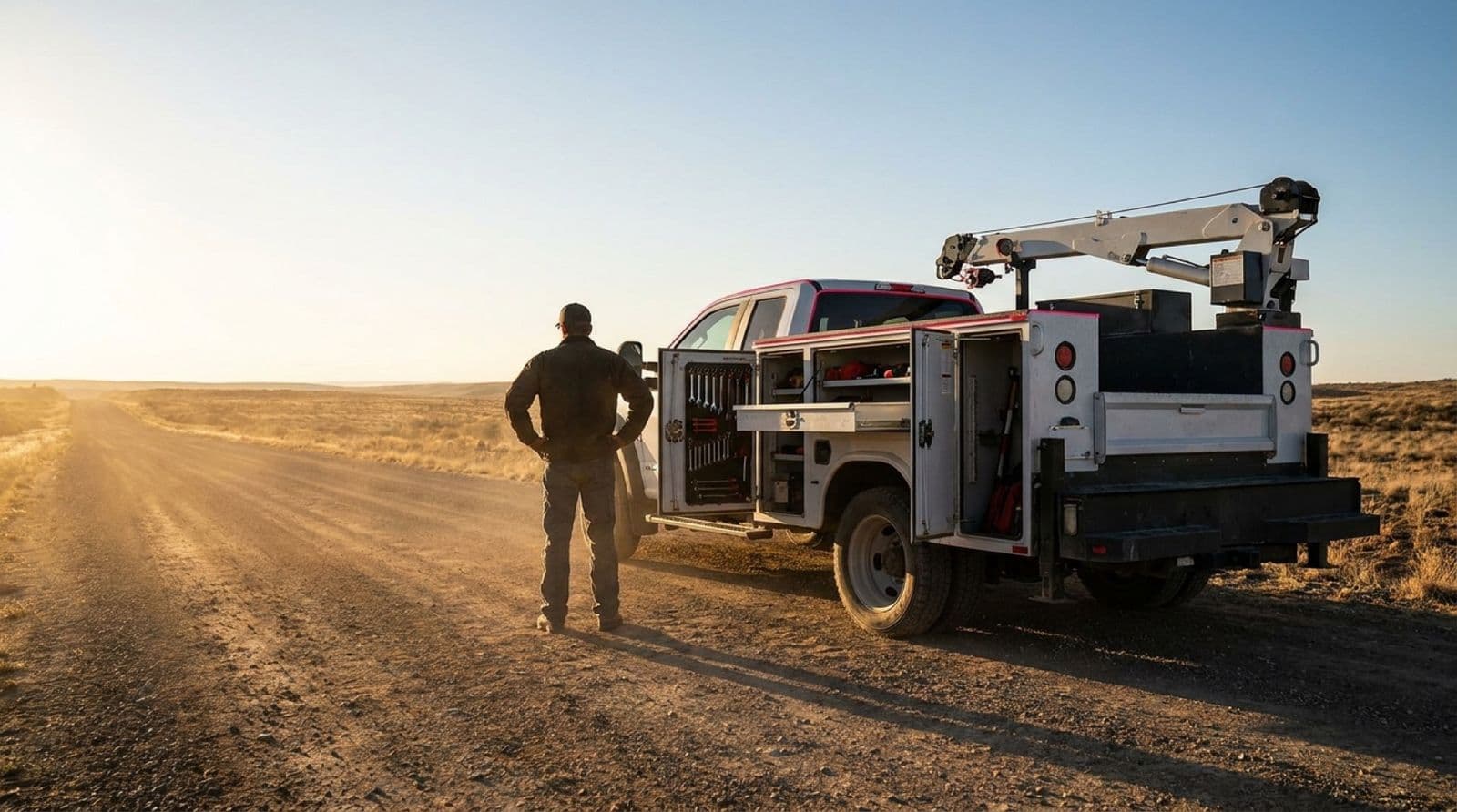
How to Start a Mobile Diesel Repair Business: The Complete Guide
Everything it takes to go from diesel tech to open for business: certifications, licensing, insurance, real startup costs, pricing, and how to land your first fleet account, with 2026 numbers you can plan around.

Mobile Diesel Mechanic Rates: Pricing Road Calls, Mileage and After-Hours
How to build a mobile diesel mechanic's price from a service call fee, hourly labor, mileage or travel time, after-hours and emergency rates and minimums, with three sample calls, a phone quote script and fleet vs one-off pricing.