
Printable Truck Inspection Form With a Damage Sketch and System Ratings
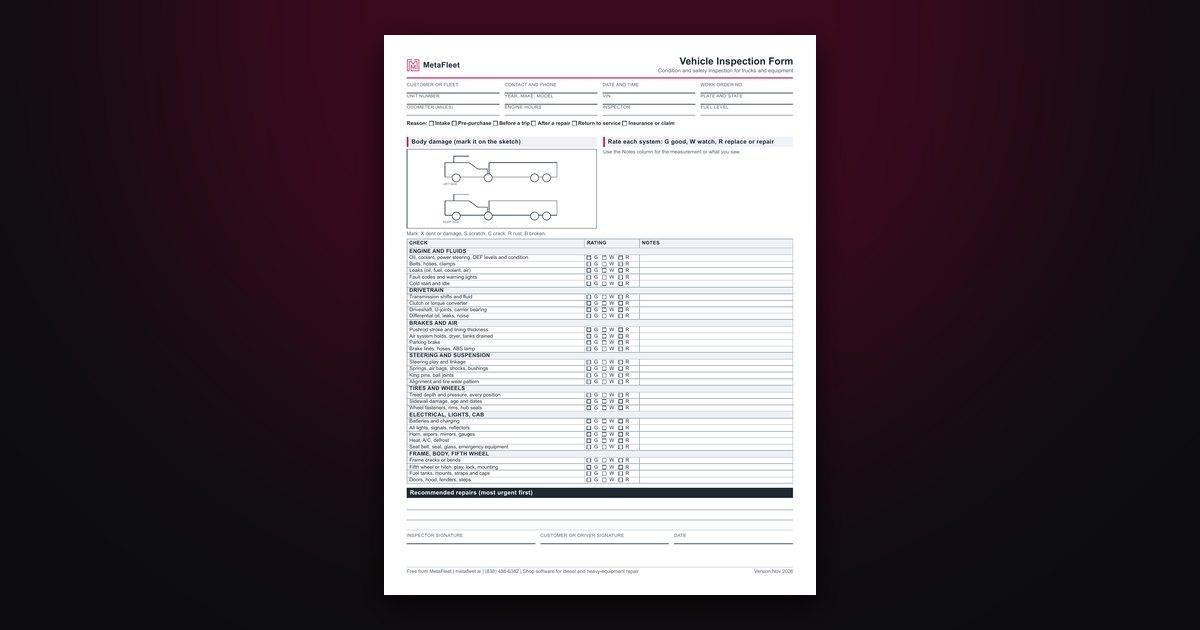
A free printable vehicle inspection form for trucks and equipment with a body damage sketch, a rating for each system and a recommended repairs list.
A vehicle inspection form records the condition of a truck at one point in time. It names the unit, marks body damage on a sketch, rates each system good, watch or replace with a note, and ends with recommended repairs and signatures. Use it at intake, before a trip, after a repair or when a unit changes hands.
A vehicle inspection form records what shape a truck is in on the day you looked at it. It is the paper a shop fills in at intake, a fleet fills in before a trip and a buyer asks for before a purchase. The free printable below has a damage sketch, a rating for each system and a list of recommended repairs, on one page.
Shops mix up four inspection papers, and each has its own job. Pick the one that matches what you are doing:
| Paper | Who fills it in | What it is for |
|---|---|---|
| DVIR | The driver | The end-of-day report of defects, under 49 CFR 396.11 |
| DOT annual inspection | A qualified inspector | The periodic inspection against Appendix A to Part 396, once every 12 months |
| PM checklist | The tech | A scheduled maintenance visit |
| This vehicle inspection form | The tech, service writer or fleet | A condition snapshot at intake, return, trip or sale |
Vehicle Inspection Form
A one-page condition and safety inspection with a body damage sketch, a good, watch or replace rating for each system and a recommended repairs list.
No spam. Just the occasional guide for repair shops and fleets.
How to fill it out
Start with the unit, the VIN, the odometer and the engine hours, and tick the reason for the inspection. Mark any body damage on the sketch with a letter so the same damage is not blamed on you later. Then rate each system: G for good, W for watch, R for replace or repair, and write the measurement or what you saw in Notes. The ratings are your call as the inspector. Write the recommended repairs in order of how urgent they are. Both the inspector and the customer or driver sign.
The systems on the form
- Engine and fluids
- Drivetrain
- Brakes and air
- Steering and suspension
- Tires and wheels
- Electrical, lights and cab
- Frame, body and fifth wheel
Keep it as a record
A photo and a signed form at intake show what the truck looked like when it came in. That helps when a fleet disputes a dent or a leak that was already there. A form at return to service shows what you fixed. Keep each one with the work order. See the work order template for the sheet that carries the job itself.
Check your own state's rules
This is a general condition form, not a government form, and it does not replace a DVIR or a DOT annual inspection. Your state, your customer and your insurer may have their own rules for inspections and records. Check them before you rely on this form.
Vehicle inspection mistakes
- Skipping the damage sketch at intake.
- Ratings with no note, so nobody knows why a system is a W.
- Using this form where a DVIR or an annual inspection report is required.
- No signature from the customer or driver.
Where MetaFleet fits
MetaFleet runs digital inspections on your shop's own forms, with PM programs and reminders. See inspections and preventive maintenance for diesel shops.
FAQs
Ready to turn inspection findings into approved repairs?
See MetaFleet in Action
Book a demo and we'll walk through how inspection findings become jobs in your shop today, show you where MetaFleet fits, and build a simple rollout plan your team can follow.
Not ready to talk? Try a free shop tool
Related Articles
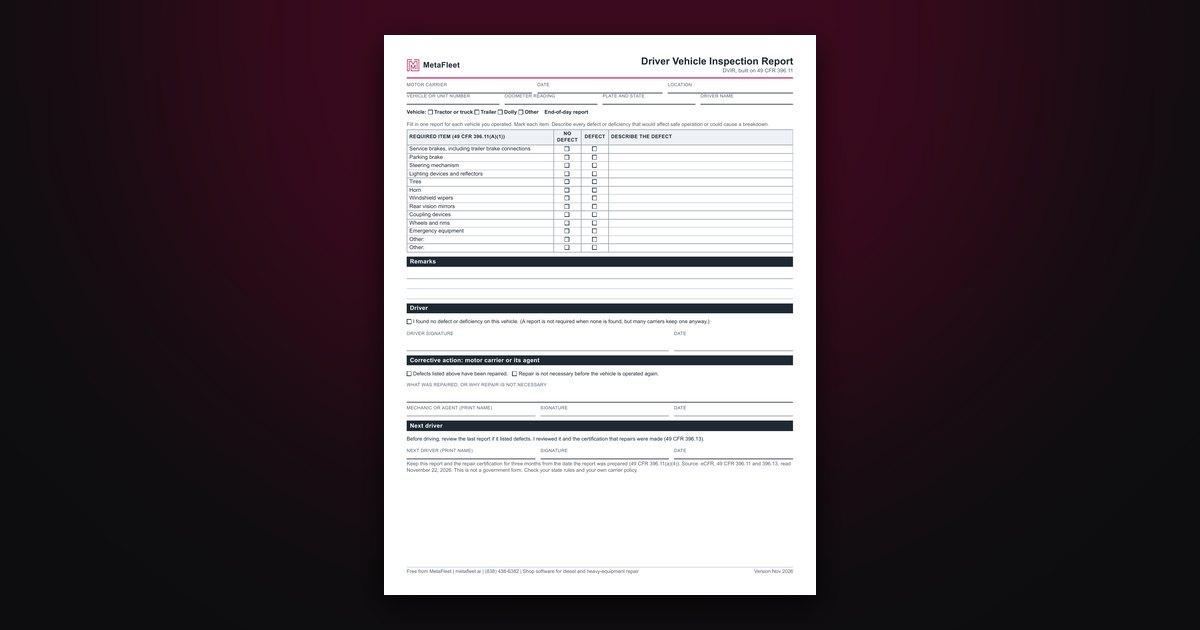
DVIR Form: Free Printable Driver Vehicle Inspection Report (49 CFR 396.11)
A free printable DVIR built on 49 CFR 396.11: the 11 required items, driver signature, repair certification and the retention rule, with how to fill it out.
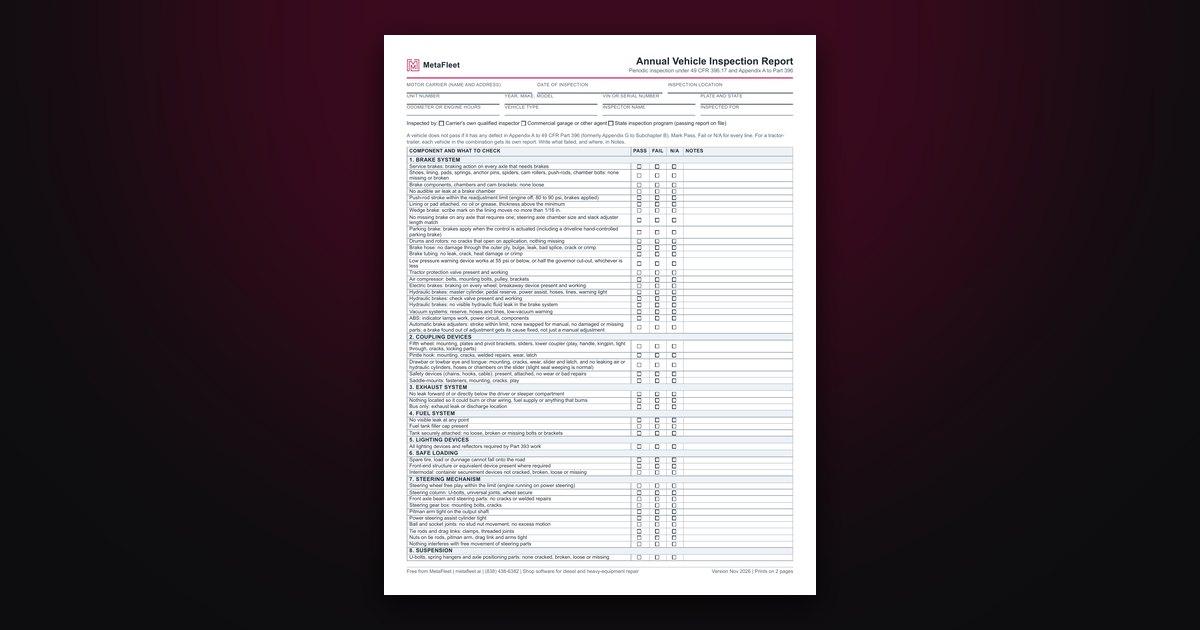
DOT Annual Inspection Form: Free Printable Periodic Inspection Report (49 CFR 396.17)
A free printable DOT annual inspection form that covers the 15 groups in Appendix A to Part 396 and the report contents 49 CFR 396.21 requires.